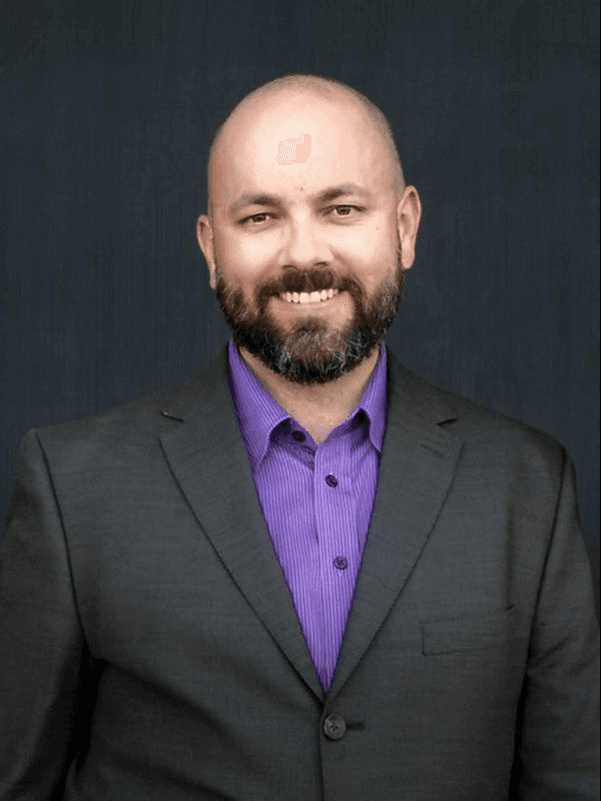
Joshua Long
Host Episode
Mastering Your Mind with Ryan Albury | Ep 50
The Bottleneck Breakthrough Podcast

Want More Resources From Josh?
Discover practical tools and insights to identify bottlenecks, fix revenue leaks, and grow your business. Get actionable resources from Josh to help you put what you've learned into practice.
/ / / / / / / /
On this episode I hosted my mindset coach, Ryan Albury, and we dug into the ways we get stuck as business owners simply because of what's going on in our heads. We also discussed how to get free and what that looks like in practical terms on a day-to-day basis.
Transcript
Speaker A
00:00:00.160 - 00:02:11.750
This is episode 50 and on it, I invited my mindset coach, Ryan Alberry, to come on and share about our work together and how he helps business owners get unlocked to live with more peace and freedom. This is the Bottleneck Breakthrough podcast.
I'm Josh Long, and this is all about helping you find and fix the biggest challenges in your business to unlock growth and profits that last. Hey, I'm excited to dig in today. My good buddy, Ryan Albury.
He's been a great influence in my life last few years, and I think as we think about how to categorize professionals in different spaces, there's no really good label for what he does, other than what I'll say is as a mindset coach.
For those of you, you that read my book, you know that mindset is the biggest lever I find in all of business, greater than all the other levers, from strategy to management to marketing vision. All of those things pale if your mindset's not right.
And Ryan stepped into my life at a point where I was pulling on some interesting threads and I was trying to just get to the next level. I had done some great work with a good friend of mine, Justin Ferriman.
In the past, I'd gotten some fantastic growth and freedom, but this next layer was just a new season, and Ryan showed up and we dug in and he challenged me in ways that others hadn't.
And I think digging in with him today is going to be fun because we're going to cover some pretty deep territory, and we're going to share some tools and techniques with you that I think will be useful.
But more than anything, we just want to give you a vision of what can be possible when you expand your mindset, dig into things that are holding you back. So, Ryan, I'd love for you to just kind of kick us off, really just dive right in.
We don't need to know, like, your background or how you got into this or all the other stuff that so many other podcasts get into.
I think just getting into, like, the foundation of what you see when you're dealing with business owners and the areas and topics that keep coming up. And we'll just start from there. So take it away.
Speaker B
00:02:13.280 - 00:03:06.640
One of the things I love about our relationship was that moment when my two favorite words turned out to be tattooed on either one of your arms. Freedom and peace. When I was in a dark place myself, it was always, oh, I want this type of relationship. Oh, I want to.
I want to have this type of business or job or whatever it was at the time. And. And as I was working with coaches, I would always come to the same place.
They're like, well, if you got that job or you got that marriage or you got that part property or whatever, what would you have? And it always came to peace. So that's a little bit more on the etheric, the experiential side of things.
But the other word, freedom, is, to me, one that's much more tangible for people because we hear about, like, chronological freedom, financial freedom, freedom of time, freedom of money. And I think that's a lot of what people get into the entrepreneurial space for so that they can have.
I mean, sometimes it works out in the other direction.
Speaker A
00:03:06.640 - 00:03:10.080
Of course, it's ironic. Yeah, it's just a bit ironic. Yeah.
Speaker B
00:03:10.160 - 00:03:29.280
But, you know, it's like people are after financial freedom, right? It's like, oh, I. I can do better doing my own thing than I can if I just get a career.
I mean, obviously there's specific cases, but that's what people are thinking. And so I love that. When you told me that you had those tattoos before I had, you know, seen you with your. With your guns out and all that,
Speaker A
00:03:29.760 - 00:05:08.970
I thought that was for those that aren't familiar. I've got freedom tattooed on my right shoulder and. And it's got wings over the top of it and then shackles underneath, like old metal shackles.
And on the outsides of the shackles are a hundred dollar bills, and they're open and freed. Because I never wanted to be controlled by money. I'll never do anything just for the money. I'll never. Nobody can ever manipulate me over money.
And I never wanted to have money be something that confined me. But also freedom for me is choice, like the ultimate autonomy and ability to do what I want, when I want.
And so for those of you that have followed my life or career, like, moving to Hawaii in 2018 was a big part of freedom. Homeschooling our kids is another big part of freedom.
Having a small business, a consultancy that gives me a lot of autonomy and structure that I can do, I can build it how I want. So that's a big one. And then on my left shoulder is the word peace.
And I actually have a Kung Fu Panda caricature underneath it because I felt like Kung Fu Panda 3 represented inner peace as best as I've ever seen.
And my kids, my wife, both laughed so hard at how big it came out because I wasn't planning on the panda being so big, but the tattoo artist was like, go big or go Home buddy, and he did a great job. But peace to me is that calm and state of balance that exists when we have inner peace.
And so to me, to have my shoulders kind of end cap my life, I want to live between peace and freedom. So, yeah, definitely fascinating that those were big, important words for Ryan, too. So obviously that allowed us to go deeper, faster.
Speaker B
00:05:09.850 - 00:05:53.790
And I love how you said it, because, yes, of course, there's freedom of time, freedom of money, freedom of where I'm going to be in the world. You mentioned Hawaii. But there is also, like, freedom of mind, freedom of emotion, freedom of body. Know that our body is.
Is open and relaxed and our nervous system is not all tangled and frazzled and wired up all day long. Our brain is functioning in a more relaxed state, not constantly firing in fight or flight. And that goes to the peace side of things. You know, that.
That inner freedom really is what peace is.
Of course, there's spiritual levels of this stuff, too, but on the tangible side, it's like these two words are, you know, even beyond, either with love or beyond love. I'd say this is what everybody really wants in the world.
Speaker A
00:05:54.270 - 00:07:45.530
Yeah, yeah. Obviously we want to be loved. We want to gain love. But by gaining love, we feel peaceful and we are more free to be ourselves.
I think to be our authentic selves is kind of the highest state that so many of us try to get to.
And I see it like, even in the assessments I do on just the disc profile alone, it'll show you where your natural inclinations are and then where you're adapting to fit into your world. And I see over and over these people take these assessments and they're. And I've done it too, done it in my life. I've not. I'm not immune to this.
But where we bend to fit into the world, we adapt. We change who we are to fit into the world. And that is defined as stress. And so anytime we're not able to freely be ourselves and.
And I'm sure Ryan and any of you listening have had cases where you meet somebody, you think you've got a great connection, and you kind of let loose and you open up a little bit and then you're like, oh, they didn't agree with that, or they got. They took it sideways or they argued with me, or they stopped talking to me afterward.
And, I mean, I'm sure I stick my foot in my mouth more than most, given that I'm such an extreme extrovert and as blunt as I am, but I find that if I Can't be fully myself. I have to bend, adapt, censor myself in a way of who I talk with. And it creates tension, it creates stress.
And so I think as I was working with Ryan, this was kind of the latest frontier for me, was realizing, like, oh, I've got these tensions that are causing me to. My body to react. And that was a big one for me, was my body deciding to shut down as I was digging into all of this stuff with Ryan.
And then my chiropractor, who does some emotional release stuff, too, that in early 24, my body just shut down. It said, oh, finally we get to release all of this stuff. Right.
Speaker B
00:07:46.410 - 00:08:14.270
You know, and when you were talking, what came for me was to really round it out to, you know, the. The core concept here, which is the business space, the entrepreneurial space, leadership, et cetera.
Because my question for you is, well, how did all that affect when everything started to come to the surface, when there was this unresolved stuff, when there were negative core beliefs, whether it was about yourself or business or money or whatever, how did that start to affect you and specifically your business and even downstream, your clients, et cetera?
Speaker A
00:08:14.430 - 00:10:57.820
Yeah.
So it's kind of like if you think of, like a stock chart kind of goes up and then it comes down, and then it goes up a little higher and then it comes down. And so for me, in each of these seasons of intense healing is the only way I can describe it. I retract a little bit. Business slows a little bit.
It's a transition phase. It's a season of change. But then it's like that new floor becomes the foundation to build upon and goes even higher.
And so for me, the journey really, if I. I mean, I'm not going to go into every layer of change, but starting in 2015, when I started working with Justin Ferriman, like, that was a big breakthrough. Even going back to 2011 with my friend Allie Brewer, who's a phenomenal. She's classified more as a life coach, but she's gifted on so many levels.
And, like, she started helping me get breakthroughs back then. But 2015 and then working with you, starting in 2023 was another season of, like, okay, the foundation needs to be taken out.
The rot, the dysfunction, the limiting beliefs, I call them boat anchors that you're just cruising around the lake dragging behind you, that are keeping your boat from moving forward. Right. And letting all of those go. So in early 24, when my body just said, finally, I get to release these, and I call them little T traumas.
I was never beat or had cigarettes put out on my cheek or anything like that. I mean, I just. But they were little T traumas. Right. But they were traumatic for me, and they were held in my body.
And so as my body let go, I was down. I could only get, like, an hour of work done a few days a week during that season.
And for those of you that have been following me for a long time, that's when I did my 75 REST program, because I thought, 75 hard is bullshit. There's no way I could do 75 hard at the time. I needed rest to get through that. And Ryan was a big part of that, and he contributed to that program.
And so some of you might be familiar with him from that. But afterward, it's like, there's more horsepower, there's more flow, there's more pace, there's more ease.
And so afterward, I'd say probably by the end of 24, it was like a new gear got unlocked in all parts of my life. Not just business, but in relationships, in the peace inside. And I was able to. I mean, my income has just continued to go up. I feel like this last.
At the end of 25, hitting a new gear, I probably doubled my average income, which was already at the highest it had been since probably 22. But again, it was that rebuilding, shedding, kind of drop down to bounce back up kind of experience.
Speaker B
00:10:58.940 - 00:11:05.260
Yeah, I love how you brought that chart imagery in. I would think of it more like a real estate chart than a stock chart. Maybe the stock charts are.
Speaker A
00:11:05.260 - 00:11:06.540
They're all the same. Yeah.
Speaker B
00:11:07.340 - 00:11:09.180
Just making fun of the stock market, but.
Speaker A
00:11:09.180 - 00:11:09.820
Oh, yeah.
Speaker B
00:11:11.260 - 00:14:42.040
What most people that I observe relate with or work with, what they do is when there's something within their business or their life in any way. But we're talking business here. What they do is they tend to say, okay, this is not working.
Whether it's some metric, whether it's their finances, whether it's in the relationships in the office or however that looks for them, they're like, okay, I have to go into hustle mode. I have to go. You mentioned 75 hard. I have to do more. I have to try harder. Longer days.
And I love that you mentioned this rot as well, because that often leads to that sort of paradigm. It's like, oh, I have to do more to get where I want to get to. I have to work harder to get where I want to get to.
I have to sacrifice more of my personal life to get to where I want to get to. I have to push these emotions away.
I have to push these thoughts or desires or preferences away because this is the most important thing and I've done it. And you know, so not pointing fingers, of course, but.
And I, you know, quite frankly, I notice myself doing it right now as I get back into this new phase of my business.
But it is a pretty common thing to want to sort of push outwardly instead of to go inwardly to take a look at, and I'll share a little personal story, but to take a look at who am I that's gotten these results that I'm getting so far that, that me or the bank or whoever are calling insufficient? Maybe they are insufficient and that's okay.
But what is it within me that has gotten me to this place where I'm at right now, whether it's number of clients, whether it's monthly income, whatever. And that kind of brings me to this piece that you know about. Obviously I didn't create this, but the B do have or the human equation as I labeled it.
But the common way that the world works is if I do, then I will get a result, which is true, right?
If I do more hours, if I do more paperwork, if I do more outreach, whatever it might be, I'm going to have more clients, more income, whatever it might be, better results in whatever metric I'm looking at within my business. But what people almost never look at or often don't, I should say is, well, what is it that leads to the doing?
Well, my mind has to have an idea of what I should do. My mind has to have some sort of path that I'm going to follow. My mind has to say, I can do more, I can do more hours, I can do that.
So there's a mental aspect that comes before the actual physical or verbal aspect of the doing within our lives and our businesses, of course.
So it really is very important to look back at that equation and say, okay, well, if I'm emotionally distraught, if I'm angry at everybody, if I'm just pissed, if I'm walking through the world depressed, whatever, if I'm anxious, whatever the emotion is, how well am I going to do whatever I need to do at the base level of my business, but also what am I going to do if I want to expand or grow or surge forward or change something massive within the business that's not necessarily working. If you're depressed or angry or anxious or believing that you can't, you're never going to do it.
So before the action, whether it's physical, whether it's verbal, whatever, before any action that somebody would take in their life or in their business, you have to look at, okay, what is it that's within me that's contributing to what I already see?
And if I go kind of like that Einstein quote, which I can never get right, the trying to change the problem with the same mindset that created the problem is never going to solve the problem. So it's like, okay, what is it in me emotionally that's in my way?
What is it in me in my thoughts, but also at the depths of my mind, the core beliefs that's in the way.
Speaker A
00:14:42.440 - 00:17:07.060
Well, and I think this is the part where I've. A lot of people have asked me, like, why do I keep digging in with experts like you? Why am I. Why do I keep going so inward?
And I would just say that the easiest answer is I don't have the outcomes in my life that I want and I'm not able to figure them out. Like, I can't just muscle my way. I used another line years ago, like, doctor cannot heal thyself.
Like, I worked in the medical field and was going to be an orthopedic surgeon. And you realize, like, you can't solve your own problems a lot of times. And I think that's the beauty of relationships.
I think that's the beauty of community. Like, why we all have expertise and gifts that we can bring to each other. But at the end of the day, I wasn't getting the outcomes I wanted.
And so what that looked like was I was getting mediocre clients for mediocre pay for high effort. And this sounds so arrogant, but I'm really smart. I know I'm really smart. I've been told I'm really smart my whole life.
And I'm like, if I'm so smart, why can't I figure out how to make enough money to just live a basic lifestyle that we wanted? My wife and I do not have champagne taste or jet setting life goals or anything like that. But we were just struggling for so long.
And so I realized, okay, if I'm intelligent and I work really hard, but I'm not getting outcomes, then there's something internally blocking it. That was the final conclusion I had.
And thankfully I've came across people like Justin and my friend Jed Cudmore and Australia and then you and like all have been phenomenal helpmates in this journey and guides.
And so I say for anybody that's listening to this, my rubric or rule of thumb is like, if you're intelligent and work hard and you care about helping others and you're not getting anywhere close to the outcomes you want, I'd say it's a hundred percent internal, like that's it.
There's just something inside you that is blocking it on that side of beliefs, traumas, emotional imbalances, things like that that are running your operating system, you're not even aware and you can't fix them by yourself without some kind of like divine intervention.
I think that's the part, Ryan, as you dig into this, that I see so clearly in my own life that as I've worked on this stuff, those things have just miraculously left and the outcomes get better and better and better.
Speaker B
00:17:08.020 - 00:17:18.480
Yeah, I do want to shout out the coaches and the consultants and the systems guys out there too, because that can be also a part of it, you know, like, you know, you have, your whole book is called the Bottleneck
Speaker A
00:17:18.480 - 00:17:25.400
Breakthrough, but to a point, right. Like every business I found the ultimate bottleneck is the owner's mindset.
Speaker B
00:17:25.560 - 00:17:26.400
Oh yeah, right.
Speaker A
00:17:26.400 - 00:19:32.640
And so you are never going to get past that.
In the end, I don't care if you set up the systems of Amazon or you have product market fit of any of the AI companies like Claude right now, but you are going to run into the limitation of your belief. And here it's a great example. I was reading about Claude last night. They are eating everyone's lunch and they are the best platform out there.
And a guy decided to build an open source agent, a bot called Claude Bot that could work on its own and leverage Claude and Anthropic's technology. And it took off like a wildfire, like nothing I've ever seen in my entire adult life in adoption and success.
And Claude's team filed cease and desist orders that he had to change the name because it wasn't sponsored by Claude. So he changed it to openclaw.
And lawyers got involved over the last few weeks and instead of going and trying to figure out how to partner with him because it is the literally the hottest thing in AI, they tried suing him. And so then OpenAI chatgpt, Sam Altman bought him out, brought him in, said, hey, join our team, we'll make it part of our platform.
And Claude just had OpenAI pull a judo move on him after Claude had great super bowl ads that positioned against OpenAI. But I guarantee that that CEO of Claude or somebody in leadership had the arrogance to think we're better than everybody, we're ahead of everybody.
This guy didn't get our approval.
And it was like, that mindset could be the biggest mistake they make in a decade because of that arrogance, because of that belief and the way that they then operated in that. And I like Claude, I like Anthropic. I think they're a better platform. I don't like Sam Altman. I don't think he's a trustworthy guy.
But Sam Altman outmaneuvered him in this, just in the last. I mean, I read that last night.
So I think those are examples of every business will run into the limitation of the owner's or the leader's mindset, right?
Speaker B
00:19:32.720 - 00:21:12.400
And so I talked about the actions leading to the results or the do that which you do, leading to that which you have or that which you see. And you just spoke. Well, we both just spoke.
And you just painted such a beautiful picture with that story of the be in the be do have equation, or the human equation, as I call it. And again, most people are looking at, what do I do here? Like, you know, Claude's crew is just like, what do we do about this?
Let's get them, let's cut them down. And the other guy's like, what do I do about this? Oh, I'm going to think creatively, I'm going to think openly, right?
And so it came from a place within the leader or the team that led to their actions, that led to their results.
And so that's one of the strongest tools that I've ever come across in results creation and also, well, being within to say, oh, okay, everything that I do is going to come from something within me, whether it's mental, emotional, physical, spiritual, and that's going to be directly related to the result that I see.
So people that are running around with tanks full of anger, tanks full of grief, tanks full of shame, tanks full of anxiety, you know, all these beliefs, like, I have to work hard to win, I have to cut people down to get ahead.
Like, whatever the beliefs are at the bottom of the unconscious mind, the matrix of the mind that's going to lead to literally the actions, which is going to lead literally to the results, which is going to lead to the level of freedom and peace that they get at the end of all that equation. But most people are just looking at actions and strategies and all this stuff, right?
That's why I think your book is so beautiful, because it really does talk a lot about all that stuff. And then exactly as you just said, it's like.
And whatever psychologically your team is made of, psychologically and emotionally, and even physically, whatever your team is made of is going to play a huge part in those results.
Speaker A
00:21:13.360 - 00:21:40.360
Yeah, for sure. And so as we dig into, like, how to clear these things out, your technique has been incredibly fantastic for me.
But talk through, like, what you do, how that comes about, what the journey's like, and then we can get into some exercises in a minute that those of you listening can practice and do on your own, but kind of give a vision of how your approach comes together and why you like it so much.
Speaker B
00:21:41.880 - 00:26:38.620
So a little backstory. Jesus came and got me in 2023, became Christian in 2025, but I was trained as a shamanic Reiki practitioner, breathwork facilitator.
I was working with plant medicines, with people doing men's work, men's groups, and trained in 2021 as a HAPA yoga teacher. So I learned a lot about how the mind and the body interact.
For those of your listeners that are a little more familiar with the new age terminology, the mind, body connection, how they relate, and that's scientific. We can look at how a thought will create a physiological response and so on.
That's not Eastern in any way, although the east is heavy on that stuff sometimes.
But what I started to learn in my own, let's say, healing expansion journey was that, okay, there's a worldly aspect, there's a physical aspect, and there's a mental, emotional, and spiritual aspect.
So the work that I do, really, I work to focus on a lot on the brain and the nervous system and the chemical body, the chemistry of the body being like the chemical packets of information that indicates to the organs, the heart, the lungs, the digestive tract, tract, whatever it might be, what's going on environmentally. So I. I really look at this stuff very mechanically, where it's like, okay, there's a physical world, there's a physical body. There's.
There's this one body that is one thing that I see when I look in the mirror. It's got all its little components. It's got a heart, it's got lungs, it's got a. A thumb, all the things, eyes, ears.
And then it gets subtler and subtler. There's a nervous system in the brain. There's these chemicals, and there's this information that's being transferred at all times.
And we live in a world of information, of course. Like, you know, of course the Internet is information, but a tree is information. Like, it's.
It's got wisdom and intelligence to it because a walnut will never turn into, you know, A strawberry? Yeah, a strawberry. Definitely not a strawberry, but definitely not a peach tree either.
So, you know, when you start to look at it mechanically, okay, there's. There's all this physical stuff. Body, nervous system, brain. But then there's all this mental stuff.
The joining point is the mind, because the mind and the brain are so often like, oh, you're up in your head. That's. That's just your mind. And it's like. But the brain and the mind are. Are correlated. There's a lot of science on that.
There's a lot of Eastern stuff where the. The Buddhists are being measured while they meditate, and their brainwave frequency is massively changing.
The brain communication coherence is improving, so the brain is functioning at a higher. A higher rate, but they will say, oh, I'm having this experience of clarity of my mind, or peace in my mind, or even a spiritual experience.
And so I really like to take people on a journey where they're putting their body into a relaxed state of the nervous system. When most of the world is running on fight or flight. Caffeine, adrenaline, cortisol, fight or flight, we're really fired up.
We're really worried about things, and that's affecting the physical body. So when I work with people, I say, okay, let's get you into a relaxed physical state.
Literally, your muscles are relaxing, you know, your nervous system is untangling. It's going into parasympathetic nervous system, or rest and digest rather than fight and flight. And your brain is going to slow down.
The measurable brainwave frequency is slowing down, which is, you know, from anxious, urgent thoughts and actions to calm, restful, open perception, ease, whatever you want to call it. And so we're really getting the mind and the body into a calm state.
From there, we can actually travel through the labyrinth of the mind down into where the core beliefs are and find out what are the core beliefs? You know, around money, around business, around clients, around love, sex, romance, God, whatever it might be in someone's life.
And you find those packets of information that are literally stored in the operating system that is on the phone. Think of the smartphone as the mind and all the different apps as your core beliefs.
Or, you know, because your phone's gonna look differently than mine when you turn it on, you're gonna have different background, different apps, different whatever, different battery percentage, capacity, energy.
So when we start to look at it mechanically like that, and you really break down, okay, there's all this stuff, and we get to these core beliefs, we go A little bit further. Cause a lot of people talk about core beliefs and we say, oh, this phrase that we hear so often, oh, there's a part of me that believes that I can.
And there's a part of me that doesn't believe that I can or that I can't. It believes that I can. And we start to say, oh, well, what are these parts?
Okay, these parts are literally different programs within the psyche, different aspects of your personality, different levels of yourself that have literally. And we're talking about the negative side here. The they have different beliefs or opposing beliefs. This one says I can. This one says I can't.
Speaker A
00:26:38.780 - 00:28:21.900
I love the Michael Singer in the Untethered Soul when he walks through like just observing your thoughts and then when you have a negative thought asking what part of me is having this thought? And I remember did that when my kids were little.
We were out playing in the cul de sac on a weekend morning and Michelle had bought this big styrofoam glider for like $3 at the Dollar Tree. And like I was chucking it and Chloe and Caleb would just run and compete with each other.
And I was starting to get angry because I was like, they're going to step on it, they're going to break it. Our fun's going to be over. And I'm like, I stopped. I was like, what part of me is angry, right?
Like, why am I getting angry over having fun with my kids, right? And a part of me just comes up from childhood in a pattern and I could neutralize it and then it was gone.
And I could talk to him calmly and be like, hey guys, we're having so much fun.
But when you guys race together, you're going to trip or push one of each other and you're going to break the step in the plane and then we're going to be done and it's not going to be as much, much fun. So how about we take turns?
And so that worked for another five or so minutes until of course they forget and they go running after it and they stepped on it and they broke it and we were done. But I wasn't mad and I didn't ruin the experience with that anger part.
Whatever part of me was angry, like, which is absurd, there should be no part of me that's angry while I'm playing with a three and five year old on a sunny Saturday morning and in a beautiful day throwing a glider around. That was $3, right? So I love that experience, that exercise that Singer talks about of just like asking what part of me is having this reaction?
And that's kind of just the very beginning of the surface level of tuning into what you're talking about.
Speaker B
00:28:23.340 - 00:30:05.320
And the thing about these parts is, yes, they're programs. They're programmed in, whether genetically or from our conception or from our birth or from when we're 1 year old or 10 years old.
Our experiences are constantly programming our mind so that we can adapt and be in this world. So some of it is like impersonal, mechanical, programmed information.
You know, if mom or dad or whatever was saying, money is evil, money is evil, money is evil, money is evil forever. Because of their own psychological construct, well, what do you think is going to get into the kids? Right. They're going to carry on these beliefs.
And so part of it is programmed, but then part of it is personal. Like we start to say, okay, yes, that was programmed into me, but now it's me.
It's an aspect of me that actually, whether I'm conscious of it or not, has these beliefs built into my system.
Now, the thing with these parts is that they can literally come up and take over your identity, your experience, your body and your mouth and your mind and be like, I'm really perceiving it this way. Just like you mentioned, I was angry about this glider thing. You know, it's like, oh, something came up. And the word that I use is hijacked.
If you look at internal family systems, they say blended, but to me, it's like a hijacking. Like, some little kid literally came up and ripped the driver out of the bus.
And he's in the driver's seat now, and he's angry, he's afraid, he's in shame. He's got some belief that's running the show, whatever it might be. And so that really is.
I think, one of the most important things that I can share with your audience is like, hey, we get hijacked by things that are less mature, less intelligent, less. Less confident, less powerful than our, like, come on, present moment, adult mature self. And that's what the majority of the world is living.
Speaker A
00:30:05.480 - 00:32:31.340
I think the hijack is such a great term because, yeah, like, in that moment with my kids, I was not in control of whatever that anger was representing. And I just did a session with you in the fall.
Like I've always been, I've always had, When I finally tuned into it in the fall was like, it felt like a dragon inside of my belly that would fly out of my mouth when somebody would challenge me on something that I was responsible for that I knew how to solve and they were questioning me. That's just always been a pattern that I'm like, I'll respond and be like, I got it or here's the answer.
And then if they question me again, it's like this dragon takes over, hijacks everything out of my mouth and it flies out. And all I can do, the only control I had up to that point was to just bite my tongue, just grit my teeth and bear it.
Stop the dragon from driving the bus, so to speak. And yeah, that hijacking.
So as you listen to this, I think it'd be interesting for you to pay attention to where do those hijacked moments come in where it's not quite full dissociation and you black out and you don't remember any details. Right. Like we're not multiple personality disorder stuff here.
But where do you have something that is so visceral you're all the way from your toes to your nose, whatever, like that you can't stop this emotional reaction. And I think Ryan will agree with me that you don't have to be held hostage by that anymore.
That's programming, that's trauma, that's operating system level stuff that can be cleared.
And I know that 100% is true because I've cleared so many things and that dragon doesn't fly out of me anymore when somebody questions my responsibility or ability to solve something that I'm in charge of and all the thousand other things that I no longer get hijacked by that I've cleared over the years. So pay attention to that. Where you feel like and it's going to be hard to notice because it is so normal.
It's like asking a fish what it thinks of water. It's like, what do you mean? What's water? It's all around me. I don't even know that it's there because I'm living in it.
So it'll be hard at first to start paying attention to those things that come out. But it's the irrational reactions that are just hair triggered that are extreme and negative.
Those are things that are part of the programming that are just running the show.
Speaker B
00:32:32.780 - 00:33:21.429
And a tool that's really great for that.
It's so basic, but it's so powerful is to just get, don't use your phone, but you just get a little pocket sized notebook, you know, something with the hardcover. So when it goes in and out of your pocket a hundred times that it's not destroyed, but.
And you get one of those pens that's got four different colors on it. And every time you have a negative thought, you write it in red. And every time you have a positive thought that you remember, you write it in green.
So you're setting the intention to start tracking what your mind is doing and you're taking it out of your mind and you're putting it on paper and then you can look back throughout the day. Oh, I thought my co worker was a f ing moron. Or I thought that my wife just looks so fantastic or how are we ever going to do this financially?
We're ruined. And you just start writing down as. I mean you don't make a career of it, but you just write down as many significant thoughts as possible.
Speaker A
00:33:21.510 - 00:33:25.590
Just tracking. It's basic tracking, just to get an inventory. Yeah, totally.
Speaker B
00:33:25.830 - 00:34:13.890
And that gives you the information.
You can measure the information, you can look at the information and say, whoa, like there's something in me that's excessively negative because you know, Jimmy, my assistant didn't actually do anything there, but I lost it on him or, or even just inside. I was livid inside, but I didn't say anything. That still is that same reaction. It just doesn't come out of you.
So there's lots and lots of great little tools to build awareness because that's what we're doing is becoming more aware of what, what sort of thoughts are there. And you could travel with the thoughts down into the emotions and then to the beliefs.
And that's really where we want to get to is those you talked about anchors. I use like the ball and chain.
We want to get to those anchors and ball and chains which are emotions, thoughts and beliefs about a specific situation or category of life like business or finances or whatever.
Speaker A
00:34:14.370 - 00:35:12.310
Yeah.
And I outlined in my book what Justin Ferriman taught me, the same concepts, but he just has a framework called betdar and it's the beliefs and the emotions lead to the thoughts, decisions, actions and produce our results. So this is all foundational stuff that the more self aware you become, the more you're willing to look internally.
And I think obviously if you're listening to this and you've gotten this far, you're pretty open. I don't find very many closed minded people or people that want to stick their head in the sand, put up with me very long.
So you've already got the beginnings and the desire to be aware. And so it's just walking through that awareness to then say, oh, these are things that I'm carrying, I'm holding that aren't serving me.
I don't need to live with this burden any longer, the ball and chain or the boat anchor any longer. I'm willing to go through the exercise to release it.
Speaker B
00:35:12.950 - 00:35:24.700
That really is the freedom that we were talking about at the beginning of the show here, where it's like, yes, there's time, freedom, money, freedom, all that geographical freedom, but really, freedom of the mind is.
Speaker A
00:35:25.420 - 00:40:30.790
There's nothing greater, in my opinion. I mean, I say it's worth all the gold in the world to release these things.
I remember early on in 2011, 12, 13, when I was just really getting squeezed and I could see these things come up. My mom always used a line that, if you don't deal with this issue, God's just going to take you around Mount Sinai again.
Like he did the Israelites in the desert for 40 years. Like, just going around in loops and loops and loops. And so for me, it was like I had these patterns that showed up.
And when I started realizing, like, oh, the only common denominator is me, I'm like, okay, it's clearly not them. It's me that I realized I would dive headlong into getting through that issue.
It almost felt like trying to climb a mountain or fight through a portal of some kind like that.
If I could just get through the issue that I knew on the other side would be a new form of a new layer of freedom, a new layer of ease, a new layer of peace.
And so I learned early on that the faster I would dive into these issues, to release them, to get freed of them, the better life got and it compounded. And so for me, I'm not making comparisons. Everybody's journeys completely unique to their own.
So I'm not saying that I had more baggage or trauma than you did or had less or whatever.
But for me, I just found that the faster that I went through the stuff, the boat anchors that I wanted to release, the faster that things compounded and improved. And it is the most addicting feedback loop because it doesn't matter how painful something is to clear or how much effort it takes or intensity.
It's like, I just know once I get to the backside, it's worth all of the effort. Like, everything was worth it. And the faster I can shed it, the better life gets. And it can feel disorienting for a lot of people.
Obviously, I'm unique in that I'm completely comfortable with uncertainty, and I'm completely comfortable with not being in control in certain parts of my life. And so I joke with clients that when I would do a lot of heavy lifting and consulting and fixing businesses.
They'd always apologize because they, we'd be a month or two in and then some massive detail would come up and they're like, sorry, Sorry we didn't get to this sooner. And I'm like, it's okay. I'm, I'm fine sewing my parachute on the way down.
And like, that level of uncertainty and willingness to deal with the unknown is unique for me. Like, I don't, I don't find a lot of people that are at that level of comfort with just diving off a cliff and knowing it's going to work out.
So there's no judgment of how long it takes you. There's no judgment of your journey and your experience and your personality and what you're comfortable with or what you're willing to tolerate.
I just know for me, the faster I went, the more that I leaned in, the better everything got in a rapid way. And it shows up in all parts of my life. Like, that's the beauty of dealing with mindset as a business owner is yes, your business runs more smoothly.
Yes, your lousy employees disappear. They just run away. They won't put up with your health and your ability to confront dysfunction and all the things I talk about in my book.
But your marriage gets better, your friends get better, your relationship with your kids gets better. Like all parts of life get better when you heal internally. I mean, I was in September, I was back in Chicago.
Perry Marshall and I run a program together and we meet twice a year and we're sitting at dinner and his daughter Tana, she's more involved in the business now and she's 27 and bright gal. We've always gotten along.
But she said, we were talking, I was talking with a few of the members about mindset stuff and one of them ended up reaching out to Ryan and working with him for, for the last six months and he's gotten great results. But because of that discussion at dinner and I told him the changes that happened in my life and Tana goes, well, it's obvious it's working.
I'm all, oh, really? Why is that? She's all, well, I like working with you now. And I didn't in the past, I was like, thanks, I appreciate the feedback.
Didn't mean that 21 year old Tana may have been a little more immature too and didn't enjoy Blunt Josh at the time, but I appreciated the feedback. And so it literally does bleed in every part of your life. And I'd Even say that the conflicts that you may have that are repetitive just disappear.
Like, I just don't have the arguments or the people that want to argue with me around various topics in my life anymore. And it's not because I'm living in an echo chamber or intolerant to dissidents or differing opinions.
It's literally just whatever was inside me that needed that confrontation, that battle is gone. So they just don't even show up anymore.
Speaker B
00:40:31.990 - 00:41:37.860
There's one more level that I think is beneficial to hit on here, which is we talked a lot about actions and mind and emotions and so on, rather than, you know, there's a problem in the business, let's say, there's a problem with your finances, let's say, and you want to move towards changing that. And so the. The most of the world is going to say, okay, hustle, grind, fix all that type of stuff we're presenting here. Okay, first, yes to all that.
But first go in and find out what is it about you that created this problem in the first place or got you here in the first place. So that's all really good. And we've talked about how when you take that approach, you're going to get quote, unquote, better results.
But what we didn't talk about yet is goals and what people actually want, the desires that they actually want. What do you actually want out of your business? I want to make 50k a month. I want to make 100k a month, whatever it might be to say.
Okay, but what is it in you that actually wants those goals? Is it a want or a need? Is it to keep up with the Joneses?
Is it to impress dad who never gave you a word of affirmation in your life, Whatever it might be, Quit
Speaker A
00:41:37.940 - 00:41:39.620
talking about Alex Hormozi that way.
Speaker B
00:41:42.500 - 00:41:44.980
Sorry, Alex. Still love you, bud.
Speaker A
00:41:45.060 - 00:41:55.930
That just is so obvious when he talks about his dad and that stuff.
Stuff that comes out and you just see the fruit and I'm not bashing the guy, it's just these are patterns that become so obvious when you do this kind of work.
Speaker B
00:41:56.330 - 00:42:08.050
Absolutely. So our goals will actually change once we've, quote, unquote rectified and there's levels to the rectification.
You know, Josh, I say the word purification all the time. It's like, you know, how much silt is there in the water?
Speaker A
00:42:08.050 - 00:42:08.330
Is.
Speaker B
00:42:08.330 - 00:44:41.990
Is it like, you know, muck or, like, almost solid? Or is there just a little bit in the bottom? Like, what, what level are you at in your purification process?
Reprogramming process, becoming your authentic self, connecting with your spirit even beyond that. To talk at that level. What level are you at with all that?
So as we do, our purification process, which I think is part of what the meaning of life is, is to just to have this challenging environment that we get put into as children and to figure it out in some way and then to let go of it some way earn our freedom. Physically, yes, of course, mentally, emotionally, but also spiritually.
And then you'll notice, and I've noticed, and I think that's the same for, for you, Josh. And I'll let you speak for yourself, of course, but you'll notice that your goals change or the reason for.
The reason for what you want changes anyway.
It's like, oh, of course I still want to make 30 grand a month or whatever it is for you or for anybody else, but now I have a completely different reason for wanting that. It's because I want to build something for somebody else. Because I want to contribute to the world. It's because I want to do the right thing.
I want to, you know, yes, of course everybody likes yachts and everybody likes palm trees and everybody likes sunshine and all that stuff.
But as you purify within yourself, what you start to see, what I start to see with my clients and people that I do this work alongside is that they have more freedom of what they want to have as well.
And I think that's just so beautiful because this whole world has been programmed by the marketing industry and of course the economics, the economy of the world plays into that. Yes, we have to pay our rent and our mortgages and so on, but we want different things for different reasons.
And that's another type of financial freedom.
Not just having tons of money, but not having to have tons of money to kind of band aid over some wound or some lack within yourself or even some lack spiritually. That is basically running our goal setting process. Why do you want to achieve that? Okay, sometimes it's very, very beautiful.
People want to build something for the homeless or they want to build something for, you know, save the whale, save the rainforest, whatever it might be. But a lot of times it's because we don't feel good and we have to keep striving for something.
And so, yeah, that that piece is really important to highlight here is that our goals change and we get into more of a life of mission and purpose and service and thinking outside of ourselves, even thinking outside of our family or even our, our group of friends, our small community. We start to think at the worldly level. And I think that really is one of the solution.
Not the only solution, but one of the solutions for making this world a better place. Of course, there's a. There's levels to that conversation, too, but that's definitely one of them.
Speaker A
00:44:42.310 - 00:46:28.090
Yeah. Yeah.
And I think it kind of goes along the lines of, those who want to be in power should never be allowed to be in power, because they're like, as you get healthier, as you get more balanced, you realize, like, there's no need to be in power to be. To have power over others.
And that it's almost like the enlightenment journey takes away so much of the striving and objects that we just get implanted in us. I remember I was looking for it.
I was trying to recall it, but there was a really funny meme I shared with a wealthy friend the other day, and it showed a picture of somebody driving a Porsche and a Bugatti drove by. They're like, oh, I wish I had enough to get a Bugatti.
And then the Bugatti's driving and he sees a yacht, and he's all, oh, I wish I had enough to get a yacht. And then it shows somebody driving, like, a Toyota pickup and says, man, my Toyota is awesome. And there was a play on it that was even better.
That was. Then the yacht owner goes and sees the Toyota truck. It's like, man, that's a sick Toyota. Like, just that it doesn't matter. There's always striving.
If somebody wants something, there's always something bigger, better, faster, nicer to always strive for. And it was funny because I have a Toyota truck and I'm completely content with it.
I wouldn't mind having a Porsche 911 someday and race around in it, but I've got no stress around it. I've got no depression or despondence about it. And my buddy's like, yeah, that's exactly right.
Him and all of his friends that are at that level of trying to figure out, how can I get a private jet? How do I justify having a private jet that costs $10,000 an hour to fly? And I'm like, that'd be nice, but I'm not changing my life for it.
I'm not going to make any decisions to try to calibrate for getting more stuff. Right.
Speaker B
00:46:28.730 - 00:46:29.850
Can't take it with you?
Speaker A
00:46:29.930 - 00:46:42.170
Nope.
So what's an exercise we can walk through here as we wrap up that helps somebody that's listening to get a little deeper, get a little further on the Journey of awareness of what's driving them.
Speaker B
00:46:43.210 - 00:46:47.930
So there's. We can do the sort of intro to the sessions that I do with people.
Speaker A
00:46:48.010 - 00:46:48.730
I think that's great.
Speaker B
00:46:49.720 - 00:46:59.160
A more relaxed physical state and a more calm, aware mind or state of mind, state of identity. I think that would be a really good one to walk people through here on the.
Speaker A
00:46:59.160 - 00:46:59.880
Yeah, go for it.
Speaker B
00:47:00.920 - 00:47:16.430
So this is okay if you're sitting up.
If you're driving, I would recommend this because, you know, there's an eyes closed component, but you can actually take yourself down into a deeply present, relaxed state with your eyes open. That is something that is achievable. So if you, if you.
Speaker A
00:47:16.430 - 00:47:19.230
I wouldn't practice it for your first time right now while you're driving?
Speaker B
00:47:19.550 - 01:00:50.410
No, no. But later on after a bunch of practice, you can do this with your eyes open and be fully present while you're operating. Life.
But yeah, for now, if you're sitting up, that's great. If you want to pause this and go find a lying down position, then that's going to be even better.
However you can be comfortable, however you can feel supported by the chair or the coach or the floor for that matter, then that's good. So wherever you are, one of the things that's really important in these types of experiences, but also as you move through life is your body posture.
There's a big bone down below called the pelvis and out of that comes the spine.
And so when we live our life with the pelvis and the spine in correct orientation, literally just that is going to create a different outcome to our physiology and how our body affects our brain and mind and so on. So your posture is far more important than you think. So right now, just notice where your pelvis is in relationship to your spine.
If you want to move it around a little bit, you can get a feel for where you are in space or in the room. What's the orientation of your body relative to other parts of your body? So just take a moment to notice where your pelvis is.
It can tip forward and back. Your spine has natural curves to it. So just move your body around, feeling where you are in relationship to the pelvis.
You can notice where your shoulders are. Are they rolled forward? Are they. Are they pulled up towards the ears? Is there spaciousness between your elbows and your ribs?
You can just sort of flap your wings a little. You can straighten your arms, bend your arms, roll your wrists, just opening and closing your hands.
But as you open your hands, try to open them further than you normally would. Just sort of back stretching the hands, wiggling the fingers, bending the fingers at all the joints.
We're just sort of starting to quote, unquote, get into the body here. So just noticing this, you can, you can move your legs as well. The ankles and toes and knees and hip joints.
Just sort of moving yourself around as you get settled. And then go up into the neck. Check where the head is at relative to the spine. Check where your skull is at relative to the shoulders.
Is there clenching in your jaw or is the jaw relaxed? And I mentioned this word, clenching. Go through your body. Now, notice at your shoulders, at your biceps, at your hands.
If there is tension in your body at first, we're just gonna notice it. We're just gonna see that it's there. You don't have to change it or soften it or anything. Just notice that it's there.
Simply noticing what is happening in your body is a huge awareness builder. So in the show we talked about becoming more aware of our thoughts and our emotions.
One of the ways you could do that is becoming more aware of tensions and pressures and constrictions or sensations in your body. So just take a moment to notice what tension is in the body. Maybe it's in the back or in the chest or in the jaw, wherever it might be.
Just notice it for now. And also noticing any other sensations. Maybe there's a twitch happening or a gentle warmth rising, or maybe there's discomfort.
If there is discomfort, feel free to adjust however you need to. But you're just noticing here what is it that's happening at the level of sensation in the body? Tension? Pressure? Yes. Also a little deeper.
What are the other sensations that you're noticing? So already your nervous system has begun to unwind. Already your brain has began to slow down. If you haven't closed your eyes yet, please do so.
Closing the eyes removes about 80% of the information that your brain has to process. So immediately your brain starts to slow down when you close your eyes.
Give it five minutes or 10 minutes, your brain has gone into a different brainwave frequency. It's becoming more relaxed. It's not having to process the world, to deal with the world, to figure out the world, to succeed in the world.
So you're just allowing the eyes to close. The brain is slowing down. The nervous system is unwinding. It's kind of fun.
Just like you have the ability to lift your arm in this moment, you have the ability to slow your heart rate in this moment, you have the ability to go into the rest and digest nervous System in this moment.
With practice, you'll be able to be more and more in control of your physiology, which is more and more in control of your brain, which is more and more beneficial for your mind and your emotion and the way that you move in the world. Just take note of what's happening within your body in this moment. Now start to relax.
Soften your jaw, soften your hands, soften your forearms, your biceps and your shoulders. Any points where there's tension being held for you, scanning through your body and just set the intention.
Whether you have to move that area of your body or whether you can just focus your mind there and indicate to the body that it is time to surrender and it is time to soften in that space. However it works for you, just soften wherever that tension is. And it's totally okay if you can't. It's totally okay if it only softens a little bit.
Totally okay if it doesn't work at all, Try it again. Next time it'll be different. And the time after that will be different as well. So there's no right or wrong here.
It's just about going in, it's just about becoming aware. It's just about softening. Now we have this secondary faculty that kind of links other faculties. The breath.
The lungs are breathing, the diaphragm is pulling, the ribs are expanding, the chest is rising and falling. So just take a moment here to notice. Again, not changing. Notice what's happening with your breath. Is it rhythmic? Is it stuttered? Is there pausing?
Is it long and slow and deep? Is it shallow? Just notice what's happening with your breath. Here again, building awareness, focusing more on these more subtle aspects of yourself.
So as you notice what's happening with your breath, continue to scan your body, relaxing your body, softening your body. You're still actively working with the body as you notice the breath. Now we're building awareness and also splitting awareness.
Deepening the breath, Pulling more air into the lungs, pushing more air out of the lungs on the exhale. You're starting to get into the breath work side now. First aspect was body awareness, body work.
Now we've done breath awareness, breath work, deepening the breath. Very simple breath work. Just longer, slower, more rhythmic breaths. Circular breathing, no pauses. Breathing more and deeply.
Breathing more rhythmically. Back to the body for a moment. Soften even more, relax even more. Set the intention to soften top to bottom, back to front, deeper and deeper layers.
Soften the body. Deepen the breath. Deepen the breath. Just noticing what it feels like to Soften the body and deepen the breath at the same time.
I'll be quiet for 10, 15 seconds or so. Just notice without my voice what's going on. As you soften and deepen, Notice what you're experiencing in the body. Just noticing.
And so, as we work with the body and as we work with the breath, we come into a greater state of relaxation. Now, the mind may have been running all over the place in this experience so far. What is this? Why are we doing this? Am I doing it right?
Doesn't feel good. Feels great. The mind may have flared up and started doing its narrative even more. That's okay.
The mind may have slowed down, quieted down, became more spacious. You may have become more present. That's okay too. There's no right or wrong. It's just what you're programmed to do in the mind.
With this type of experience, it will change. It can change over time with these types of practices. But just for a moment, notice what it is that your mind is doing. What is it saying?
What types of words or images is it producing in response to this experience? Maybe this is your first type of experience like this. Maybe this is your thousandth. Just notice what your mind wants to do right now.
What is it saying? What is it showing you? Is it going into the past or into the future? Where is your mind going? What is it showing you? Just take a look.
Coming back into the body. Softening the body. Once more. All through the body. The neck, the back, the shoulders, the pelvis, the spine, the legs, the feet, the hands.
Soften everything as if you are butter that's came out of the fridge. Softening over time. Breathing more deeply. Again, once more. And now indicate to your mind time to slow down. Time to produce less thought.
Time to produce less image. Time to come out of the past and future. Step into a place of leadership and tell your mind. From a place of love, not force. It's time to slow down.
Still softening the body, still deepening the breath. Work with the mind. This might be new for you. That's okay. Just experiment with it. Just play with it.
Just like I can lift up my arm or my leg or tilt my head side to side. Can I reclaim dominion over my mind? Benevolent dictatorship over my mind. To indicate that it doesn't have to do all that.
It doesn't have to work so hard, doesn't have to try so hard, doesn't have to hectically scan across all the options and all the problems that might happen. It can just relax. Just indicate to Your mind that it's time to soften. Even if it softens 0.01% right now, it's a win.
So just tell your mind it's time to sit down, slow down, relax your body. Deepen your breath while you do this. And now let's take one more moment to indicate to the mind what it could do right now.
Start to think of something that you're grateful for. Maybe it's your spouse, maybe it's your dog. Maybe it's something that someone said to you or an experience that you had spiritually.
Just start to think of something that you're grateful for, indicating to the mind what to think about. This is the power that we have. We are not the mind. We are the users of the mind. It's a tool that's been programmed. It's not your identity.
Indicate to the mind to think of something that you're grateful for. Hold that thought, hold that image just for a few seconds. See if you can even bring up the body sensations of gratitude.
Let the gratitude grow into a physiological experience. Almost turning up the volume knob of the gratitude. If it's at a 1, take it to a 2 or 3. If it's at a 5, take it to a 7 or an 8, turn it up.
There's so many things to be grateful for. Running water, lights, power, the invention of the automobile, Amazon, whatever it might be for you.
And so, in conclusion, to close, let's just bring the corners of your mouth up towards your eyes. Smiling, just allowing that gratitude and that smile to be the mental and the physiological experience.
Notice if you are feeling greater peace, greater freedom in the moment. And when you're ready, you can start to bring movement to your body. You can start to wake up, the body coming back into the space.
And when it's right for you, you can open up your eyes.
Speaker A
01:00:52.570 - 01:03:57.610
Yeah, I love doing these every time. I mean, this is. We don't go as deep every session, but when I work with Ryan, that's how they start. And I keep.
Throughout this whole conversation, I keep thinking of the actor Bill Murray. I saw an interview of his once, and he always has these fantastic stories, these fantastic life experiences.
And the host asked him, like, well, why does this keep happening to you? Why do you keep having these wonderful outcomes in life?
And he said, you know, early in my career, I had a mentor tell me that the more relaxed we are, the better we perform. And he says, I've just decided to adopt that to my entire life. And I got to meet him once. It was at a basketball tournament in 2017.
I was there at a conference with a friend, and Bill was sitting across the dining hall from us, the dining room of this restaurant. And my friend was like, oh, let's go get our picture. I'm like, let's leave the man alone. He's eating lunch.
And at the end of our lunch, somebody had been bugging Bill to get a picture. So he's standing up. So my buddy's like, let's go. And I'm like, okay. So I walk over, and Bill's about to sit down.
And I was like, hey, Bill, you got one more in you? And in his caricature kind of way, he kind of shrugs his shoulder and nods.
And so I put my arm around him, and my friend's on his left, I'm on his right, and I've got my camera up. And right before I take the picture, I tell him, I said, you know that interview you had?
You talked about relaxing being a key to increased performance? I said, that was really meaningful for me. He smiled at me and he nodded, and we took the picture and parted ways. But it was.
It is like, I don't know about you, but for me, when I was just following Ryan's lead, like, everything's so much easier, everything's so much more relaxed when I get into that state. And I find that when I'm in that state more consistently, serendipity, provision, flow, grace, whatever you want to call it, keeps happening.
Doors keep opening. Things keep unfolding. There's no force, there's no effort. I don't have to do anything. I'm just being. And the stuff unfolds.
And so if that resonates for you, and if you're interested in working with Ryan, the journey from this exercise then gets into dealing with parts, talking and interacting with parts of yourself, the negative parts, the parts that are defending yourself, protecting yourself. And that's the journey that I've gone on with him, to release them and be freed of them. That's how his sessions work.
And they go from that warm up, essentially getting your body into an open state, to then welcome those parts in and interact with them. And so if you're interested, you can reach out to him.
His email is welcomeryyanallberry.com so R Y-A-N-A L-B-U-R-Y.com and I think he's got a website coming. And if you have questions, you can obviously reach out to me, shoot me a note, and I'm happy to answer any questions. But Brian, this was fantastic.
Thanks for sharing your brilliance and thanks for pouring into me over these years and appreciate our friendship, as do I.
Speaker B
01:03:57.610 - 01:04:00.730
Yeah, I appreciate you having me here and hopefully we could do it again sometime.
Speaker A
01:04:00.890 - 01:04:21.950
Yeah, that was the other thing I was thinking of. If this was useful for you and you like this kind of content. If you'd like Ryan to come back, just shoot me a note, leave a comment somewhere.
And I'm happy to keep evolving this podcast to be as useful as possible for you. I get zero benefit from hearing my own voice, so I do not.
Speaker B
01:04:22.190 - 01:04:22.910
A little bit.
Speaker A
01:04:22.910 - 01:04:24.670
I do not need to hear my own voice.
Speaker B
01:04:25.790 - 01:04:27.310
You're a better man than I then.
Speaker A
01:04:28.990 - 01:04:33.590
I've been told my whole life that I should go into voice work with this. What did somebody called it?
Speaker B
01:04:33.590 - 01:04:33.870
This.
Speaker A
01:04:33.950 - 01:04:47.640
These dulcet tones, deep voice. But I've tried it. I don't care for it. It doesn't do anything for me. So I exist to serve everybody here, so let me know. Beautiful. Thanks again, Ryan.
Have a great day.
Speaker B
01:04:47.800 - 01:04:48.360
Cheers.
Speaker A
01:04:49.320 - 01:04:56.120
This podcast theme music is an excerpt from triptych of snippets by Septah Helix. It's used under Creative Commons.
Latest podcasts



Ready to Build a High-Performance Sales Team?
Let’s stop guessing and finally solve the real problem. Get the right team in place, unlock predictable revenue, and get back to growing your business.
Start working with Josh