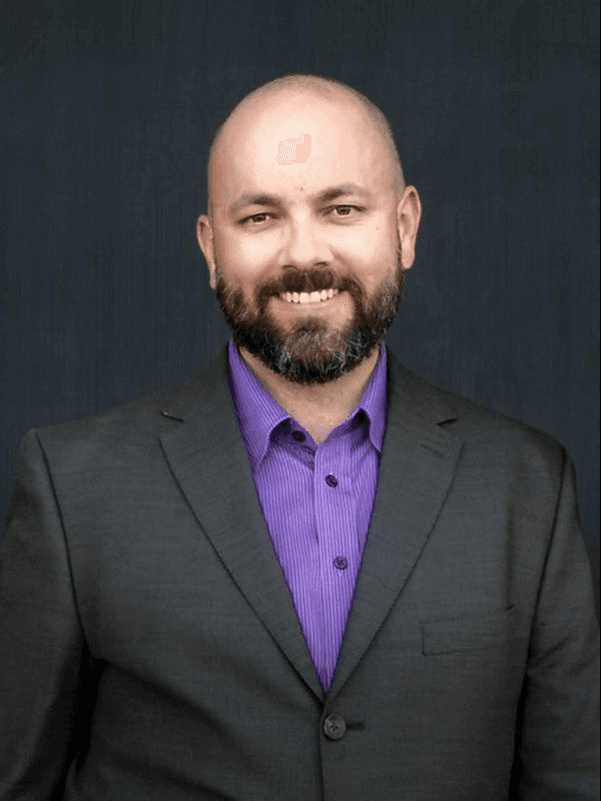
Joshua Long
Host Episode
A Proven Framework to Unlock Sustainable Scale | Ep 49
The Bottleneck Breakthrough Podcast

Want More Resources From Josh?
Discover practical tools and insights to identify bottlenecks, fix revenue leaks, and grow your business. Get actionable resources from Josh to help you put what you've learned into practice.
/ / / / / / / /
This episode is actually a presentation I gave in April 2025 at Perry Marshall's "Equity Summit" and focuses on my Sustainable Scale Framework.
To access the slides from the presentation, you can download them at https://bbg.li/equity-slides
Transcript
Speaker A
00:00:00.320 - 00:19:52.480
This is episode 49, and I'm excited to share it with you as it's a presentation I made in April of 2025 at My Good friend Perry Marshall's Equity Summit. On it, I go over my sustainable scale framework and how I use it to consistently unlock growth in companies.
This is the Bottleneck Breakthrough podcast. I'm Josh Long, and this is all about helping you find and fix the biggest challenges in your business to unlock growth and profits. So I have slides.
You can get them. I'll share it, all of it. There's nothing that you need to worry about writing down a bunch of notes. I will go fast, so listen fast.
You can ask lots of questions. I'm fine being interrupted. My goal is just to help you guys execute. I wrote a book called Bottleneck Breakthrough. A number of you have read it.
It's focused on getting unstuck. Think of it as Theory of constraints light for small businesses. When I came up with it, it was just the way my brain worked of if I find there's.
There's something hanging my company up, if I fix it, figure it out, delegate it, hand it off, growth happens. And so I found over time, there's just patterns in businesses.
There's common bottlenecks at different revenue plateaus, and that's what the book goes through. I'll give you a quick rundown of it, and then I'm going to dig into something today that'll help you guys scale.
So the whole basis of Bottlenecks is there's some friction in your business somewhere. When I work with clients, the first thing that I work on is freeing up your time.
Because you, as the owner, if you don't have time, nothing is going to get done. There's no way to be proactive and get things unstuck.
If you're running around, hair on fire, fire extinguishers in both hands, getting through the end of the day and not remembering what you got done. Anybody resonate with that? Anybody ever have those days happen, right? So the first bottleneck is always the owner's time.
Next, getting to the owner's frustration. I love a Dan Kennedy quote, says, if I wake up thinking about you more than two days in a row and you're not my wife, you have to go.
And so I find that we build a lot of tolerance, right? Like, we're tough, we endure. We're kind of psychotic being entrepreneurs. And so we put up with a lot of dysfunction. We tolerate a lot of dysfunction.
And so when I sit down with an owner, I'm like, well, what are you frustrated about? Well, everything. My employees are flaky, clients are pay late, such and such vendor, whatever. I'm like, okay, well, you make the rules.
This is all make believe, so let's make it how you want it, right? So like, let's fix this stuff. Like, you don't have to tolerate it. Next, revenue. So I, I talk a lot about revenue plateaus.
Most common ones, a million bucks. At a million bucks, you need an operations manager. You need a little Napoleon cracking the whip, keeping the trains on time.
2 million to 3 million, you need to move up market. 5 million, you need a couple key managers. 10 million, you got to have an executive team, right? So at revenue plateaus, this is how we get unstuck.
There's common, common bottlenecks that everybody faces at these revenue plateaus. Next, getting into your fulfillment, Is it running on time? Are you able to deliver on the promise that you're giving?
In all of your marketing, how many times have you had something you've bought where the salesperson or the marketing was like, oh my gosh, this is unbelievable, I need this. And then you get it to fulfillment. You're like, is this even the same company? Do they communicate to each other? Did I just get hosed?
I call it the timeshare pitch, right? Like, how many times have you heard of people buying a timeshare?
And you're like, oh, my gosh, you get to sit on the beach and there's like 8,000 blackout dates a year, right? Like, I mean, and you show up and the beds are like rock. I mean, so. So the fulfillment has to match what's being told on the front end.
And then finally, communication as the business grows. Typically when the company gets to about 2 to 3 million, you as the owner need to communicate about 400% more with your staff than you think you do.
I know the conversations you have in your head don't count towards that quota. So you have to communicate more because people are no longer just within go go gadget arm reach of you, right? You've got layers of management.
You've got frontline employees that maybe don't see you for weeks on end. You may not know some of the people in your own company. All the more reason to communicate.
So that's the basis of unlocking, like, the quick and dirty, of fixing bottlenecks in your business. What I want to talk about today is my sustainable scale framework. Now, this is focused on the revenue engine of your business, right?
The things that make you money. We've Got sales and marketing and then the systems of those sales and marketing. And yeah, feel free to take all the pictures.
This stuff's on my website. You guys can get the deck. I've got a whole masterclass on this. You can go download for free on the resources page of my site.
I give all this stuff away free. You just need it, have it, take it, whatever. So I'm going to walk you through the dysfunctions in businesses from the perspective of this framework.
How to diagnose where you're at and then how to fix it. So ever see a company where the salespeople are doing everything?
They're hustling and cold calling, they're creating proposals, they're closing the deals, they're doing the onboarding, they're making sure the payments are collected, they're even writing copy, they're doing messaging, they're doing everything right. Well, that dysfunction for me is called high turnover because salespeople aren't meant to do everything.
The business owners that are like, I just want a duplicate of me, I just want a carbon copy of me, I'm like, well, all you're doing is training your future competitors because if they're a carbon copy, they're entrepreneurial, they're going to figure all this stuff out and then they're just going to go do it and compete against you because you're not paying them all the money. So why, why would you put all that pressure on them? So when sales is doing everything, the dysfunctional behavior is high turnover.
No salesperson is going to stick around in that environment because they can go somewhere better with a better environment and make more money.
Next, most common, I see, and this is a lot in the planet, Perry, adjacent worlds of Internet marketing is where marketing gets really, really good and they find some place of inefficiency to take advantage of and it's just a cash grab. I mean, we've all seen it how many times? And I love Frank Kearney's a good human being, but how many times has that guy reinvented himself, right?
Like how many different shticks has that guy pitched because he's figured out how to do marketing really well and grab a lot of cash and then disappear, right? And there's endless examples.
So when there's Mark, when marketing is everything marketing, writes the copy, gets the leads, does the sales page, does everything, there's no sustainability because the market's going to leave, the platform is going to regulate. Facebook's going to stop giving you leads because they got in a pissing match. With iOS, it's just a flash in the pan, so it's just a cash grab. Next.
This is probably really common in Planet Perry. I call this the where you've got the systems dialed, you've got the fulfillment great.
And you deliver really, really well with clients, but you don't have a way to generate leads or necessarily close them really well. I call that order takers. You rise with the tide of the market. As the market goes up, you do well. As the market goes down, you do poorly.
So the goal is, how do we blend all of these dysfunctions? How do we find the balance here? Right? Well, a lot of times we'll say, well, we need to just add a little bit more of something else.
And so over here we end up with marketing and sales working together. And you see this often where marketing is generating leads and sales is closing them. But there's no structure, right?
There's no systems, there's no reporting, there's no segmentation, there's no follow up. And we call that messy growth. I see that all the time. Where companies are growing with their hair on fire.
But then they hit some plateau and there's no clarity around. What do we do next? Well, you need a report, you need some kind of tracking, you need some kind of communication with clients to get feedback.
And so the solution on all of these is to pull the opposite direction of what's missing. So in this case, in messy growth, we go build systems. I'm giving you the answers. I'm talking about it, right?
Like they don't have the systems, they don't have the CRM, they don't have the segmentation. Next you'll see companies where they have some sales and some systems.
And Perry and I had a client a couple of years ago, they were this, they were doing like 37 million, but they had no marketing leadership. They had no ability to go get in front of target clients. And guess what? They were doing 37 million.
And their net profit was 10% because the sales team was leading everything. It was just like chaos on a stick. The systems people were like, we're here to serve.
We've got salesforce set up, we've got all these reports, but this sales guy wants this, this sales guy wants this. And nobody was leading, like, who do they target? So pulling towards marketing is the solution.
They need somebody that's going to say, look, here's our ideal client profile. Here's who we're going after, here's their pain points, here's the voice of the customer.
Here's the messaging, here's the deck, here's the proposals that you sales guys have to keep using and have some structure. Right? Leadership. Next, there's lifestyle business. Now, there might be a lot of you in here. This is a Common Planet Perry phenomenon.
We have a great marketing and good systems, and the business runs really well. And you can turn those into cash cows. The only problem is they stop scaling because you don't have a sales force that's talking to prospects.
It's figuring out what's missing, what's causing prospects to not move off the fence or take the next action. There's no feedback loop. And so to take that lifestyle business and create some sustainable scale, you've got to add a sales component.
So any questions on this framework as you see it, as you think about where your business is at? I've got a bunch of questions coming up next on how to diagnose yourself, but that was kind of the rapid fire. All good, great. So I do assessments.
I have a background. I was planning on being a surgeon in a prior life.
I worked in an er, and I saw that the best ER docs can diagnose what's going on really, really well because they've seen these patterns over and over with patients, right? They. They figure out what is going wrong before they prescribe anything.
And the worst doctors would just do test after test after test after test to eliminate, like, well, that's not meningitis. Well, it's not strep. It's not whatever. And like, this one doc I sat in with, he did more spinal taps than all the other docs combined.
Now, I don't know if you've ever been in a. In a. In the room where a spinal tap's happening, they lay the patient curled up in a ball, like, fetal position.
And I'm typically the one holding them in that position, right? I'm low man on the totem pole.
And he's on the other side, coming from their back, their lower spine with a needle about that long, shaky hand, trying to hit the bullseye, right, Right between the vertebrae. So he doesn't hit a nerve, the spinal column or spinal cord to get the fluid out, to test it, to make sure it doesn't have meningitis.
This guy tested for spinal meningitis more than anybody I ever saw. It's like the case rate of spinal meningitis is like 0.01%, right? But, man, this guy wanted to make sure you didn't have spinal meningitis.
I was like, patients stayed forever they got a bajillion dollars worth of tests because he didn't know what he was doing. So all the best docs I saw could narrow in and get like, okay, you're probably somewhere between herpes and some weird infection, right?
Like, they got there real quick and then they do some final assessments and then they make a diagnosis. Well, in the world of business, I don't see anybody doing effective diagnostics. There's a lot of prescriptions going on. There's a lot of solutions.
A guaranteed model, right? I know this will work. I know this worked for us, right?
I mean, Bob's laughing here because we've seen like eleventy bajillion things that we are guaranteed are going to work, right? How many of you guys have tried something that was guaranteed was going to work for you and it didn't work? Right? There's a lot of prescriptions.
Well, I call prescription without diagnosis malpractice, right? So you may be doing it to yourself how many times you're like, oh, this isn't working. I know the answer.
I'm just going to go throw a mud against the wall and see what sticks, right? You're committing malpractice against your own business. So I start always with assessments. We have to get everything out on the table.
We have to figure out where you're at. It's like Alice in Wonderland. I talk about this in my book. She's lost, right? She just is running away from everything.
Comes across the Cheshire cat, right? Cheshire cat's like, hey, little girl, what are you doing? She's all, well, I'm trying to get home. Which way do I go?
And he says, well, where do you want to go? She says, I don't know. And he says, well, it doesn't matter which way you go.
It's like, without having some general direction of where you're at and where you want to go, figuring out what to implement is just guesswork. So with your sales team, here's an assessment that I go through. It's all basic stuff. Again, you guys can get these in the slides, but wrong button.
First question I have when somebody brings me in to recruit or turn around their sales team, I say, do you have anybody making over a hundred grand? And you may be saying to yourself, I'm not making 100 grand. How's anybody else going to be making 100 grand? They. That's not for you.
This situation is for companies that have sales teams. Revenue is there. There's money going around, money being made. But if you don't have a salesperson making at least a hundred grand.
I would say you don't really have a sales force. You have like a customer support plus team.
You have people that are there taking calls, taking answering questions and taking the easy ones off the table. But you don't have real salespeople because salespeople make money. Good salespeople make lots of money.
There's good salespeople that make millions and millions of dollars a year. Now you may have judgments, you may have head trash around that.
You may say, oh, I will never let somebody in my organization that puts pressure on somebody to close them. That's not what sales is. Sales is figuring out where the need is, where the confusion is and working with them to get over that hump.
And that's where, going back to the previous graph, the lifestyle business. So many lifestyle businesses don't get this feedback because they don't have anybody talking directly to prospects.
Figure out what the real objections are. They may say, oh, well, your price is too high. Well, is it really? Based on what? What are we comparing it to?
What other alternatives are you dealing with? So salespeople make good money. So if you don't have somebody making over 100 grand, got to figure out why. What's missing in your business model?
What's missing in your comp plan? Do you have enough leads? How is that working? So then if you don't have that, has anyone ever made over 100 grand in your sales department?
Our sales staff lasting longer than a year because as much as we want to say salespeople or enter, insert whatever other role there is, are flaky, don't work hard, Gen Z is lazy. Millennials are entitled. Whatever you want to make the excuses for.
If you don't have people sticking it out at least a year, there's probably a problem in your business. Your management, your leadership, your compensation. Some way you're driving them away. Or maybe you have a bad sales manager, right?
Anybody ever seen that? Like parent. I knew a client guy who's like 4 or 5 million in revenue. Oh, I need a sales manager. Guess what brings a guy in.
Abdicates 100% of the responsibility to him. Guess what happens? Roller coaster, roller coaster, fraud, all sorts of horrible things. Has to fire the guy.
Drops down to 3 million in revenue because he thought for certain this guy was going to solve all of his problems. It's like it's not how you run your organization. You don't just abdicate responsibility to some new person.
Your sales reps have a reliable way to identify and reach out to qualified prospects. Right. I love.
There was a story Perry told years ago of a guy who, I think it was the petroleum or nuclear engineer and had this great solution, but had no way to get in touch with the decision makers. Right. And Perry was like, well, yeah, there's a great solution, but you can't get a hold of anybody that'll buy.
And so if, if you have, you may have like the cure to cancer, but if you don't have a way to get in touch with the decision makers or you get blocked by insurance, you've got all these problems with your business model. Your sales reps aren't going to fix that. So you have to have a proven way to get in touch with or have leads coming in.
And then is there a manager or marketing person that helps create the presentations and content they share with prospects? Again, is relying, not relying on the salespeople to come up with all of this.
Like we've seen so many times in clients where you get a wild variety of.
Of presentations, of messages, of things going out the door, contracts that have clauses in it that you can't fulfill on or you'd never approve again, is there some kind of oversight? And then do you know the close rate of each sales rep month by month?
Now, I had a client recently where they said, oh, our sales reps closing 50% of qualified leads. I was like, great, that's awesome. How do you know they're qualified? Oh, that's what he tells us.
I was like, how many other leads have come in that he says aren't qualified? Has anybody ever looked at those? Why aren't those considered qualified? And so again, nobody was managing him. They were just taking it at his word.
And then finally do more than 50% hit quota regularly. And you may be like, what the heck's quota? I don't want to manage that.
I think this is where just some basic oversight, some basic management really goes a long way to helping you understand, like, oh, do I actually have a sales organization? Do I not like, Tony's a client. I've brought in a great salesperson for him. And Tony manages his sales team fantastically.
He knows the numbers, he has the leads, he's the marketing manager, he's getting the leads, and he keeps track of all of those calls, how much revenue by week that these sales reps are getting. And of course, it's easy to upgrade a salesperson in an environment like that, right? So we come in and we replace his low performer.
We assessed everybody, we looked at his performance, we replaced a low performer. And how much of an improvement did the new guy in the last year make over the previous low performer?
Speaker B
00:19:54.000 - 00:19:57.680
So year to date he's up 50% over the guy that he replaced.
Speaker A
00:19:58.070 - 00:20:00.390
5 0, 55 0%.
Speaker B
00:20:02.390 - 00:20:07.550
And I think this year we're going to grow about year over year. We're going to be about 26, 27%.
Speaker A
00:20:07.550 - 00:30:15.460
Over last year in a very tight, potentially declining market. Right? Yes. Yeah. So this is, he's a great example of we went through this. His reps are making over 100 grand. He's managing.
Leads are coming in, we upgrade then. And the fruit is in the results. Right. So thanks, thanks for being a great shill. So your marketing assessment. So that's sales.
We move over to marketing. Is there anyone in charge of generating leads? Now?
You may say, oh, I've got this agency that does this or I've got this freelancer that does this or my assistant is in charge of this. Do they know that they're in charge of it? Do you keep track of it? Do they know what their goals are?
Do they know what your ideal client profile is and where to find more of them? How many qualified leads are you generating per month? And again, who's determining whether they're qualified or not?
Is it enough or do they come up short for whoever's in charge of this? Do you know how much your average lead costs?
That's the most fascinating one for me is how many companies just have no concept of what it costs to generate a lead. Like Logan. You know your numbers inside and out. Like you've, you generate leads all day long. You've been doing it for years off the top of your head.
What's your average cost per lead? Come on. I don't know that number as well as you think I do. Good. Well, I get to twist the screws on you then.
What range would you say you're shooting for? About $1.25. Yep. For an opt in lead. Yep. Yep. And so that's a different criteria. Right.
He's getting building an email list that then he emails relevant information, research, education to over time and that produces long term revenue over time, right? Yep. Do you know what your return on ad spend is now going to say? Something that is really not going to be popular in this room.
But Facebook has pretty much been broken for about three years. Most businesses that are just spending money on Facebook ads to generate a sale to make a profit are not getting that profit.
And there's a lot of people that say, well, but my company keeps growing or my revenue is good, I would say that it's probably a loss and you're probably making up for it somewhere else. And profit is covering a multitude of sins. So do you know what your return on ad spend is? Most people don't and it's really messy right now.
Perry did an event last month, had a group of speakers and Scott Oldford got on and spoke. And he's a really smart marketer and he's doing some interesting stuff with regard to building media lists and selling newsletter lists and stuff.
And he said a big company came to him and bought a newsletter list of, I don't know, 5, 10,000 subscribers, maybe it's 50,000, I don't know.
Anyways, a good sized list and they said we're buying this because we're getting this list, buying it cheaper than it would cost us to go build our own list right now. So media is all over the map and it's really messy. Do you know what return on marketing expense?
So ad spend is what you're paying to Google or Facebook or TikTok or X or whatever, Twitter, but your marketing expense is everything you're spending for content production, for your team, for your ad spend, everything else. Do you have any kind of perspective on that? So that's marketing.
Then we get into systems and this is the systems of sales and marketing, not necessarily all of your fulfillment. So do you have a CRM or email platform that all leads are captured into? I imagine most people here have something like that.
Perry asked me years ago, it was about 2017. He's like, so what's the new shiny sexy thing you're working with clients on? And I'm like just making sure they're following up with leads.
And he goes, you know, that makes sense.
He said John McGee was doing an audit of roundtable members autoresponders and I think he said something like 60% of the members didn't even have an autoresponder set up. So just the basics, right? Do you have a CRM? Is it capturing leads? Are they segmented? Are you following up effectively?
Do you segment them based on their qualifications and or behavior so they may opt in for. Logan has a wide variety of information that he's putting out there.
So there's mindset stuff, there's performance improvement stuff, there's weird Chinese supplement stuff. He gets pretty esoteric, right? So you can segment based, you segment based on those interests so then he can follow up with things that are related.
Do you email regularly to nurture Unconverted leads. Now in the world I live in, I do mostly B2B consulting. Help with manufacturers, help with service companies.
And those businesses, when they've got prospects, they're all qualified. Like 95% of the businesses I work with, the leads they get are completely qualified. They're able, they have the money, they have the need.
They would see a benefit of working with my clients. So my philosophy on following up with them is they either buy, they die, or they install a restraining order like they're all qualified.
Like there's no reason to stop following up with people.
So as you think about your unconverted leads, there's some people that are like, oh, if we don't get somebody to buy within 30 minutes, they're dead to us. It's like, are you sure? Have you ever stayed in touch and seen, so what are you doing to nurture them?
Are there templates for your sales team to use to keep leads engaged in their pipelines?
Because if your salespeople are saying, hey, just checking in, seeing if you've made a decision, do you need a new proposal that's not effective follow up? Anybody been personally persuaded by that kind of follow up? It's oh yeah, you know what, I've been meaning to give you money. Thanks, I forgot, right.
No, it doesn't work. Right. So, and then do you use automations or triggered tasks or next steps in the sales process? So a lot of my clients end up using HubSpot.
HubSpot has some really cool features in that you can have automations that then require a salesperson or customer support person to go do that and check it off before the automation continues. So it doesn't always have to just be email hammered like every other day. Hey, you want to buy now? Hey, you want to buy now? Hey, how about now?
Like that's the last thing you want to do. So thinking through like the logic and the strategy of it and then do you have reporting that gives you clarity over their performance or forecasts?
Had a client years ago, they actually had an office in Naperville, they had another one in Fresno where I'm from Central California. And they had three partners. One of them was in Fresno, the two other two were out here and they were about $15 million manufacturing company.
They made commercialized trailered kitchens.
So when like a hospital or a hotel or a prison or universities pumping out thousands of meals a day and they need to remodel their kitchen and they're going to be down for two months, they bring in my clients trailerized kitchen and just plug it in and off. They're off to the races. And I was like, you guys should be doing 100 million, not 15 million.
And so I get in and I'm trying to fix their systems, trying to figure out what's missing. And they had Sugar CRM back in the day when open source CRMs, it was way before all the Salesforce stuff was popular and hosted and everything.
So they had Sugar CRM and they'd spent about 50 grand in deployment with a consultant and the partner, one of the partners here in Naperville, literally would get on a sales call just about every other week and say, hey, I found a new CRM. We should go do this, we should go do that. I was like, well, why not just use sugar? Oh, it's outdated.
And I said, he kept asking me, what's the best CRM? And I'm like, the one you have, like, it doesn't matter. Just use the one you got. And so they never used it. He would refuse to use it.
So they had an assistant, her full time job, I'm sorry, part time.
She did only 20 hours a week going to all five salespeople and the two owners that did sales to collect data every week on their pipeline and put it in a spreadsheet to email it out to everybody.
Five minutes before the weekly sales meeting, I was like, you guys are paying this galaxy 25 grand of her time just to fill out a spreadsheet that if you just entered the data into Sugar, you just press a button and run a report. It was like. It was crazy. I wanted to shake him.
And so anyway, having reporting gives so much clarity and there's so many people out there that just refuse to enter data, refuse to track things. And so you have to manage it. You have to keep them compliant. So that's the basics of my assessments. Love to answer questions.
If you'd like help, there's a bunch of ways. I think Emily has a handout. I do roadmaps. Roadmaps are just diagnosing your situation and outlining the solution.
Obviously, I talked about Tony and recruiting. That's probably my favorite thing to do right now is recruiting salespeople.
Because you get the right salesperson in and it makes a world of difference if you have the infrastructure and ready. And then obviously we have Advanced Mastery Network. Perry's talked about it multiple times.
We're going into year eight, starts in September, but we're able to get you up and running, get started, hit the ground running with solving your bottlenecks. Right away. But yeah, go right ahead. Happy to answer questions.
Speaker C
00:30:15.540 - 00:30:27.220
Right, so this might not be the right place for this question, but let's give it a go. If I want to build all this from, from scratch with a new business, where do I start?
Speaker A
00:30:29.140 - 00:30:31.460
Yeah. So what, what is the business?
Speaker C
00:30:32.260 - 00:30:42.820
I. An industrial precision pump, physical object. It's a building block. It's very B2B.
Speaker A
00:30:43.620 - 00:32:40.000
Yeah. So if it's a. If you're a manufacturer. Yeah.
Then the biggest misstep in manufacturing is to think, oh, I'll just go find a manufacturer's rep because they already have all the clients and they'll just represent me. And I've yet to see that work out. If anybody has a case study that it did work out, please come educate me. I just did a webinar. Is it Dr. Lisa.
What's her name? She does theory of constraints implementation for machine shops. I can't remember. Lisa Lang. I don't know.
Anyway, she found me through Perry and I did a webinar to 150 machine shops because she's like, they need sales teams, they need salespeople. And all of them wanted to find a manufacturer's rep because it's like no commission, they just rep your product and you pay them only out of sales.
I would say that if you're starting, you have to be the number one salesperson. Every entrepreneur, every business owner has to be the number one salesperson to start with.
And if you're like, oh dear God, I'm an introvert, I hate people, like, then you need to get over that. And because nobody's going to sell it as good as you out of the gate and nobody's going to figure it out for you out of the gate.
So as the entrepreneur, you have to figure out, okay, I'm going to narrow down to 10 prospects, 10 companies. I'm going to follow up with them until they buy. I'm going to figure out why they buy. I'm going to.
And then I'll hire a salesperson that can follow that path to do it. But it's really, really tough to try to build a sales team if nobody's selling, because nobody knows what the path is, you're gonna overpay.
Nobody wants to be an entrepreneurial salesperson. Figuring it out for the entrepreneur if they're good.
So you may find some 17 year old, that's a lot of potential, but they're not going to represent you perfect very well in an industrial environment.
Speaker C
00:32:40.800 - 00:32:43.680
Right. So me and my business partners have to blaze the trail.
Speaker A
00:32:43.680 - 00:33:31.100
You Got to do it. You got to blaze the trail. All right? And that's the thing, I think, I think every part of your business you should know how to do.
Because if you don't know how to do something in your business, it's really hard to manage. And it's a real easy way to get taken advantage of because I see so many times people are like, well, we need to get into Facebook ads.
And this agency knows how to do Facebook ads. And you don't own your, they set up your Facebook ads account. You don't know how to log in, you don't know how to get access to it.
They run it, it works or it doesn't work, and then they leave and you're stuck.
So I think you have to do it yourself at first and then start with one salesperson, probably somebody that's more like a wingman, that can do 80% of it. They're prospecting, they're getting the meetings, they can get somebody interested.
Speaker C
00:33:31.340 - 00:33:31.740
Right.
Speaker A
00:33:31.820 - 00:33:45.660
Not necessarily a sales development rep.
I don't like that role where they're just cold calling to get appointments, but they're following up and they're getting engaged and then you're coming alongside and saying, oh yeah, I can answer all the technical questions, I can answer the high level stuff and I get the contract closed.
Speaker C
00:33:46.060 - 00:33:46.420
Right.
Speaker A
00:33:46.420 - 00:34:00.740
But that's typically what I'd recommend is you get started, get a couple deals under your belt, and then bring in like a wingman, a junior salesperson that can do more of the legwork and get in front of people, but you're still there to come in and close.
Speaker C
00:34:01.060 - 00:34:06.020
Right. And then we do the same thing with marketing and then we do the same thing with the systems.
Speaker A
00:34:06.020 - 00:34:07.380
Yeah. Okay, great.
Speaker C
00:34:07.620 - 00:34:08.140
Thank you.
Speaker A
00:34:08.140 - 00:34:09.060
Yeah, my pleasure.
Speaker D
00:34:10.740 - 00:34:51.390
You had a bullet on your marketing slide that talked about knowing your return on ad spend. And I guess if you can't trust what Google is telling you, what your OAS is or Facebook. How do you know?
Because I sometimes will get a sale and it'll, Google will tell me, hey, you know, they came from this ad and I'll also get an affiliate report and it came from that affiliate. And do you have a philosophy or some guidance on how to kind of work through how to really determine what your pro as is?
Speaker A
00:34:52.350 - 00:37:02.670
Yeah, so I, I default to like back of the napkin tracking.
So I look at like, I write down how many emails came in, how many orders came in, and then what the ad spend was and then if it's trying to get multi attributional, Alex is The guy to talk to there. So I. It's a mess, right, Alex? I mean, there's no clean way to get attribution. Exactly right. So I do broad strokes, like.
And a good buddy of mine who's talking in a minute, I refuse to call him J. Cron. I've known him as Kronstead forever. But, like, he won't tell this story, so I'm not stealing his thunder. But when he was running Kajabi, they were.
They had three. A three person marketing team, and they were running really lean and really tight, and Kajabi's growing.
I think he said to me that it was like 4% month over month, just consistently. And some months were better than others, but they had raised some capital and they were told they had to have a bigger marketing team.
So they get a bigger marketing team, about eight people, and they grow it to spending about a million dollars a month on ad spend. And he's trying to get attribution, trying to get attribution. And he's like, I don't trust this data. Like, I don't trust the reporting.
And they couldn't give him a clear answer. So he's like, fine, pause it for two weeks. Like, no, no, no. The whole world's gonna die and crash, right? And two weeks goes by, nothing changes.
He says, keep it paused for another two weeks. Nothing changed. So he goes, you're all fired. And so we saved a million bucks a month in ad spend and cut back to a team of three from eight.
So I keep it real broad. I'm just like, hey, is it net positive but all the attribution you can get into with Alex. Hey, Josh, the scientific term is not mess, it's modeled.
Modeled? Yeah. Perry's friend Dennis Noble has a saying. All models are bullshit, but some are useful. So it depends on which model you apply.
So maybe the model you use right now is not very useful. Thanks.
Speaker B
00:37:04.780 - 00:37:38.650
So I've got a business that I'm working with some partners, and we're in the position there's a good and a bad side to it that they are scaling pretty quickly with the audience size. And right now the issue is kind of an interesting one to deal with because we have basically a subscription model for this list as it's growing.
But beyond that, they don't have anything to sell.
So my question is, is it better to go out and find something to do it at speed with the way that it's growing doing affiliate sales, or should we try to build our own products in house? What's Worth more time.
Speaker A
00:37:38.730 - 00:37:40.730
So you've, you, you built a list.
Speaker B
00:37:41.050 - 00:37:41.530
Yes.
Speaker A
00:37:41.610 - 00:37:42.130
Okay.
Speaker B
00:37:42.130 - 00:37:44.170
It's growing. It's. It's growing pretty quickly.
Speaker A
00:37:44.330 - 00:37:46.570
What it, what, what's the focus of the list?
Speaker B
00:37:47.130 - 00:37:53.530
So this is in an industry for the. It would be Native American market.
Speaker A
00:37:53.610 - 00:37:56.650
Listening. Native. Native American market.
Speaker B
00:37:56.730 - 00:38:01.130
Native American market. It's informational. Gosh.
Speaker A
00:38:04.170 - 00:38:09.770
Yeah. So to. This is not my space of startups building a list and figuring out what to sell them.
Speaker B
00:38:09.850 - 00:38:10.410
Okay.
Speaker A
00:38:10.570 - 00:38:12.410
I'm sorry. Like. Yeah, that's.
Speaker B
00:38:12.410 - 00:38:13.770
I thought. Yeah, yeah.
Speaker A
00:38:14.729 - 00:38:36.910
The affiliate space. I, I don't, I haven't heard much about the affiliate space in a number of years.
So it's, it's a rough market to try to find and try to get paid and there's a lot of hucksters out there. Yeah. I mean what's your guys core competency? I mean it sounds like building audiences is your competency.
Speaker B
00:38:36.990 - 00:38:47.150
Well really the people that are involved, most that are running the company are very, very close to the market that they are top level. Like one of the people was running for chief. Multiple years.
Speaker A
00:38:48.190 - 00:39:05.090
Yeah. Yes. There's a lot of trust. I mean there's a lot of. I mean it would almost be. It is somewhat affiliate.
But what's the medium that they're delivering content through? Like why are people signing up for this list? What are they getting?
Speaker B
00:39:05.330 - 00:39:11.170
They're getting information to keep them updated about all the news, all the stories that are related to that particular tribe.
Speaker A
00:39:11.330 - 00:39:14.210
So that. And is it just an email newsletter?
Speaker B
00:39:14.290 - 00:39:15.330
That's what it is now.
Speaker A
00:39:16.130 - 00:39:20.230
Yeah. So then I just run sponsored ads. Yeah, that's the simplest.
Speaker B
00:39:20.230 - 00:39:22.070
I mean we're exploring the different ways to go.
Speaker A
00:39:22.070 - 00:40:01.010
I mean if you've got, if you got an audience and they're consuming general content, then sponsored ads, sponsored posts, whatever would be the easiest way to monetize that. Yeah. And you avoid it is essentially affiliates.
But it's, it's a cleaner, healthier audience to deal with with sponsorships and like, I mean you guys see it on all the podcasts like BetterHelp and AG1 Greens and all the stuff that. I mean those guys are spending money like crazy.
So they'll spend money on sponsored ads and I'm sure you can find related businesses that are more a better affinity to that audience.
Speaker B
00:40:01.090 - 00:40:06.770
We can do that. It'll be a little bit more work. We're not wanting to go into AdSense or anything just quite that easy. But yeah. To find direct.
Speaker A
00:40:06.770 - 00:40:28.980
No, I think this is where like building out an actual like media department that's selling advertising. Yeah. If you've got the list, and then it's just a matter of does it pay off for the advertisers. So that'd be the easiest.
If it's general information and you guys don't have some specific skill set around building some specific product, I would just do sponsored ads.
Speaker B
00:40:29.060 - 00:40:33.860
Okay. Okay. Yeah. I didn't know for sure how well he'd be able to help me with that, but I thought it'd be worth tossing it.
Speaker A
00:40:33.860 - 00:40:35.100
Yeah, it's fine. It's all good.
Speaker B
00:40:35.100 - 00:40:35.620
Thank you.
Speaker A
00:40:36.020 - 00:40:47.120
Let's give Josh a hand. Yeah. This podcast theme music is an excerpt from triptych of snippets by Septahelix. It's used under Creative Commons.
Latest podcasts



Ready to Build a High-Performance Sales Team?
Let’s stop guessing and finally solve the real problem. Get the right team in place, unlock predictable revenue, and get back to growing your business.
Start working with Josh