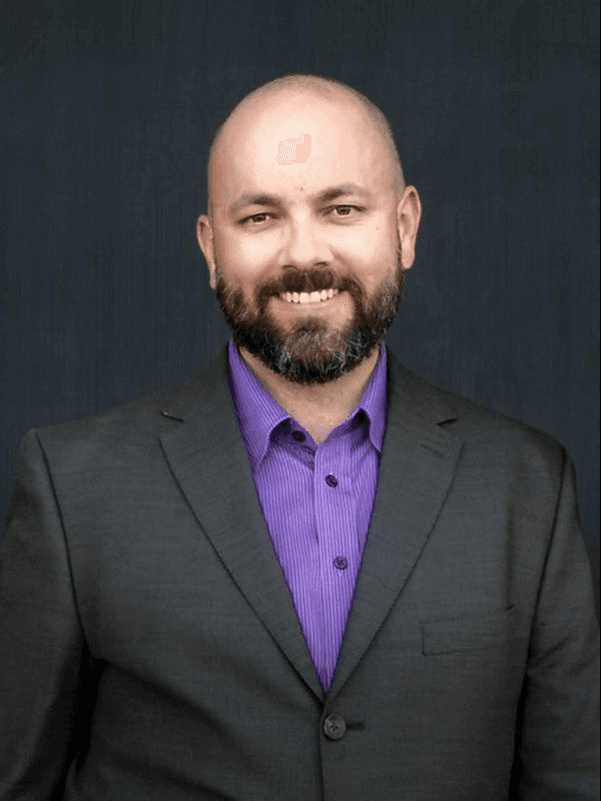
Joshua Long
Guest Episode
How to Stop Being the Bottleneck in Your Business - The Flywheel Effect
The Bottleneck Breakthrough Podcast
/ / / / / / / /
In this episode of The Flywheel Effect, host Brent Sonnek-Schmelz sits down with Josh Long, consultant at Bottleneck Breakthrough Method. Josh Long discussed the challenges small business owners face, particularly the concept of "common senseitis" where owners expect employees to share their level of commitment and skill. He emphasized the importance of empathy, effective leadership, and understanding organizational stages, such as the $1 million to $5 million growth plateau. Josh highlighted the need for business owners to adapt their management styles and delegate responsibilities to achieve work-life balance. He also shared insights on the Peter Principle, Dunning-Kruger effect, and the value of self-awareness in leadership.
Josh 00:00
I talked about in my book, I call it common sense itis, where the business owners, they should just know how to do it this way. It's common sense when I'm like, it's a disease, because you know every part of your business and you're driven by it, and not just with the financial outcome, but also the psychological, emotional outcome of fixing things, solving problems, creating like all the things that small business owners do to get into business.
Brent 00:31
Hello, and welcome to another episode of The Flywheel Effect, where we're sponsored by Vital. Vital is the place where home integrators go to receive support to grow their businesses, grow as a person, and unlock the opportunities they have in front of them. If you'd like more information about the company Vital, please go to Vital Grow with vital.com and reach out to Matt Burnett. So we have a guest today, but no Matt, and we have Josh Long. Josh Long is a consultant helping small businesses unlock growth. He's also the author of a book called The Bottleneck Breakthrough, which helped guide you through that process. Josh, how you doing today?
Josh 01:05
Doing great, Brent. Happy to be here.
Brent 01:08
Cool. What do you.. I.. we're gonna just jump right into this, but reading a little bit about you did a little bit of work with Tony Robbins, which I think I wanna.. I gotta understand that. Did you actually spend time with Tony Robbins? Was this a no?
Brent 01:20
No, I personally did not spend time with Tony Robbins. I spent time with his team. I was working for a guy named Chet Holmes, who had a company called The Ultimate Sales Machine, I think was the name of the Chet Holmes International. He had the book The Ultimate Sales Machine, and I was his marketing director. And so we did a strategic partnership with Tony and launched the Business Mastery event with him, and so I helped launch that, create it, the promotion of it, and worked closely with Tony's team, but friends of mine have gotten, they're great, they're all driven, they're very hard charging, he's a he and Chet were cut from the same cloth, they were both very hard charging high standards guys that are perfectionists, so you get a lot of pressure for everything to be perfect all the time from their perspective, which is a good standard. I personally don't follow that philosophy in my management style or leadership style, but definitely toughened me up at a young age.
Brent 02:14
That's good. Yeah, and like I think that leadership style leads to two types of people working with them: one, people who appreciate the abuse, and they last forever, or others who last a very short period of time.
Josh 02:26
Yeah, yeah. And I think there's, I think there's a dynamic of the types of people that appreciate the abuse. There's a split there too, because there's maybe a more healthy version of that and a less healthy version of that, so there's a lot of codependency type of people that that will put up with that kind of abuse, so it's really interesting looking at organizations and who survives different cultures and leadership styles. So, yeah, it was definitely a good one for me to cut my teeth on and get some thick skin, for sure.
Brent 02:58
Oh, good, but you don't let that shit flow farther downhill, which I also appreciate. It sounds like you're that give you an appreciation for what people go through as employees.
Josh 03:08
Yeah, I think empathy for me has been a really useful tool, and I think in society we conflate empathy with compassion, and to me it's empathy is really the ability to read people, that's it. Like compassion is when we get caught up in the emotion of it, but I really care about how are people wired and how do we get them in their sweet spot, not what is my expectation of how this should be done, that it has to be done my way, this way, at this timeline, and whatnot. I actually
Brent 03:37
think that's a really hard thing for small business owners, right? They're small businesses are entrepreneurial, but a specific type of entrepreneurship. They're not necessarily big idea entrepreneurship. They are hard work. Let's get the job done. I'm going to take this thing and I'm going to do the best I can with it. A lot of them, I think, have a hard time with employees that maybe don't have that same mindset, even though they can do the job really well, and right, and so I look at this and say, okay, you got to understand why people work, they need people to work to have a paycheck, so they can go out to dinner with their family on Friday night, right, and watch football on Sunday, they're not going to work because they love it, like a business owner does,
Josh 04:19
I think, yeah, I talked about in my book, I call it common sense itis, where the business owners, they should just know how to do it this way, it's common sense, but I'm like, it's a disease, because you know every part of your business and you're driven by it, and not just with the financial outcome, but also the psychological, emotional outcome of fixing things, solving problems, creating like all the things that small business owners do to get into business, but they don't realize that probably 90% of the rest of society is not wired that way, and they're not as committed as they are. For me, it's always been like, how do we explain this, how to do their job, how. Do the how this business works in a way that causes that employee to thrive to get results for the owner to be happy, and it's a big gap that a lot of business owners don't realize of the mindset, and so to me, again, coming back to empathy is just the ability to read others and get data from them to be able to use that, and again, from my experience with Chet and Tony, was that they ran their organizations one way, but that led to a lot of burnout, it led to a lot of frustration, or like you said, people that don't want to put up with the standards or the abuse, and there's just so much cost of turnover and so much cost of recruiting and all that stuff, so for me, it's like caring about getting this person into their sweet spot, and not enabling them, not bending over backwards for their unrealistic or unreasonable demands. But I think leadership, the best leaders are the ones that learn how people are wired and get them into their sweet spot.
Brent 05:59
Yeah, I think, think that's.. I'd like to kind of go a little more on that. It's a.. it's something that most small business owners, integrators, where we deal with, and you deal with others, don't realize that leadership isn't just being the boss.
Josh 06:12
Yeah, yeah, there's definitely a misnomer. And I think it's.. if I had to guess, I think it's like starts on the playground, right, in school, like whoever's the loudest, whoever's the pushiest, whoever's the biggest ego gets the control, or you play on sports teams when you're little, and the most vocal ends up being put as the leader, but when we get into organizations, it's the hope, I love Peter Drucker, I'm a big Peter Drucker fan, and so it's like the purpose of management is to set priorities, is to establish structure and order, and make sure that the system is running. And to me, that has nothing to do with bossing people around, that has everything to do with developing systems. And in talking from an integrator perspective, like the integrators are the ones that get that they figure out, okay, this is a system. How do we make it flow? And the best CEOs and entrepreneurs are the ones that can see what the integrator sees, but can cast the vision and have the confidence, but not necessarily force their way on everybody. And so I think that's the challenge is modern society thinks leadership is bossy, but I find that there's so many books, from Drucker to even Jim Collins, Good to Great, that classic one of talking about the different levels of leaders and the styles and what the level five leader and Collins' perspective would say accomplish in developing people, letting the systems run and helping orchestrate it, not drive
Brent 07:45
it. I think it was good to great. I'm just standing with this. Is there was a was it good to create, or was another book something a while where they're talking about the CEO of Kimberly Clark, who is a very.. was not a classic.. I can't remember the guy was.. he was not a classic like ego-driven leader, he was quiet, he got his work done, he enabled people, I think, really well, and made them comfortable in the role, and were able to drive outsized returns and last a much longer time than people who are driven by radical change, ego, and deals.
Josh 08:19
That's it. That's it. And, like, I think in, if we look at level four leaders that Collins references, I just did a quick search to see if it'll, if we can get the list of the names, because I always misquote them too, but I remember the two level four leaders that he talked about were Lee Iacocca and Jack Welch, and so obviously Lee Iacocca has ego first, right? Yeah, and big change, right, like obviously Lee Iacocca was formidable in the automotive space. He created the Ford Mustang on a small budget and went and created the Chrysler minivan and the Chrysler LeBaron, like
Brent 08:52
they car, yeah,
Josh 08:53
yeah. And they said that, like, he wanted a convertible with the Chrysler LeBaron, and he went to the engineers, and they were like, might take two to three years, and whatever, and he goes and grabs a sawzall, and literally cuts the top off the baron sitting there in the manufacturing facility. Now, those guys are magnanimous, and they're easy to write stories about, and they're very famous. And then Jack Welch with GE and GE Financial and stuff, his whole line was "Fire the bottom 10% and I don't think there's necessarily anything wrong with that premise, but how he went about it wasn't necessarily as effective, and so then Colin's argument was they left those companies and those companies tanked because they could only stay together while the magnanimous leader was there, and whereas the level five leaders, and I always, I think it was Coleman Mockler, was the name. I just had this pull up. Let me see. Yeah, so Darwin Smith at Kimberly Clark was a level five leader, and
Brent 09:54
that always stuck with me.
Josh 09:54
Coleman Mockler at Gillette was the one that always stuck with me from that story, and these are guys will know. Ever know about if it weren't for Jim Collins, other than the people that directly reported to them were the only ones that knew about it, but they were all focused on getting the right people into the right seats and making sure they were thriving, and then empowering them so that whenever they left, that the companies were thriving and run well. So, to me, like my biggest, my biggest goal as a leader or manager is how do I help this person thrive and unlock as much of their potential as possible,
Brent 10:29
that which is awesome. You're not even though you wrote a book, yours wasn't entitled Iacocca, right?
Josh 10:36
Yeah, it takes a certain kind of ego strength to go that route.
Brent 10:39
I've read that book, you may have that book. It's actually a great read, right? Like, oh, I'm sure he's
Josh 10:45
a brilliant man, like he's a brilliant man. No knock on that. Like, we're just talking about organizations can run,
Brent 10:50
right? And difference, it's almost like Iacocca with the Mustang, and actually in the early years of Chrysler was probably the guy those Ford and Chrysler needed at that moment, I don't think, 100% Welch. I actually, he mean, while he drove GE to its highest of highs, in a way, it was on the, it was on the base of duct tape and bailing wire of GE Finance, which basically decimated
Josh 11:18
all, which was essentially fraud in my opinion. Yeah,
Brent 11:21
yeah, which is different. I'll give you a guy, Coca credit, but I look at, well, yeah, I ever read about him, he's like the.. I was in business school, early 2000s
Josh 11:28
same here,
Brent 11:28
he's like the guy, yep, he
Josh 11:30
never resonated with me ever,
Brent 11:32
yeah, he was like, wow, this is something, he would say it didn't resonate with me fully, but I like, this is an incredible organization, GE Finance is a wild company, but when I'm looking at it in retrospect, it's like he gutted everything else that has to do with GE, and now GE is doesn't exist, essentially in three separate companies, GE Finance went away, and yeah, it's like he destroyed the pillar of American capitalism for over 100 years,
Josh 12:00
yeah,
Brent 12:02
yeah, that's what you, it's all what time it plays open, yes, because we can, we sounds like we can go down this road quite a way with all these guys. Well, yeah, I think I love this kind of the way you're looking at it with around around leadership, but those are big companies,
Josh 12:18
right,
Brent 12:19
but it does,
Josh 12:20
and I think, like, the small business leadership is realizing, like, the stages of companies, and I talk about this in my book, and, by the way, I'm not here to promote my book, it's almost 10 years old now, but I just reference it because there are some useful frameworks that for business owners that I find to think through, and one is revenue plateaus, and with revenue plateaus, the business changes in dramatic ways, because when you get to a million bucks, like everybody's been just an extension of you, but now you really need, like, an operations manager, somebody to keep the an integrator, somebody to keep the trains running on time, right, and a little Mussolini in there, cracking the whip, making sure everything's going out, and then right around 3 million, you need some management, a couple other managers, you need somebody in charge of your finances, you need somebody in charge of sales or marketing, and now you have to become a an organizational leader, not just a leader of a team, because up to a million, and about a million million and a half, everybody can just be an extension of your arms, go gadget arms, right? Where you're
Brent 13:27
it's not really a team, it's just a person and a couple other people that are doing stuff.
Josh 13:30
Yeah, and everybody's cross-trained, everybody rolls up their sleeves, there's no real differentiation. But once you get to 3 million, you have to start creating an organization, because if you don't, and you keep growing, you'll get to 5 million, and you'll be more miserable than you've ever been in your entire life. And it's the funniest thing, business owners that talk to me, they're like, I just crossed a million, my next goal is 5 million. I'm like, no, can't be, you'll get stuck, because the you've been managing by whack a mole, and by the time you get to 5 million, the moles are as big as me, and everybody's waiting around for you to solve them until they can get their job done, and they just keep stacking up one after the other, and if you don't have managers that can handle 80% of those moles, then everybody's stuck, and you're going to bounce back between three and five, four to 6 million, and you're going to be having more pressure and more stress than you've had in a long time, so it's a challenge. So then the funny thing is, if you do get the management in place, you just go right past 5 million. I've never seen a company that's stuck at 5 million and has management in place and everything's running smoothly, like it just doesn't exist, and so you end up running right up to the eight nine $10 million range, and it happens over and over, but the business owners don't think about, because unless they've been in a growing organization, unless they learned from being in a startup that was successful, nobody teaches us about these stages, nobody teaches about these transitions. And what the com, what the business requires of you to mature as the leader, and the challenge becomes I've had Sally forever, she just gets it done, but not ever thinking of is Sally in the right spot now, given the size of the company, and that's the hardest part, I think, for a small business owner right now, is
Brent 15:18
yeah, because especially if that person's in finance or accounting in some way, the world kind of changes as you get to that $10 million line. This is great. This is no, this is going to be utilized heavily by Matt, because what you're doing is you're reinforcing everything that we tell to our clients on the technology integration side, because we use 2 million, but it's the same number, doesn't make a difference whether it's one or three, and say, look, you can get a basically get to
Josh 15:44
probably 2 million now, because of inflation over the last 10 years.
Brent 15:47
Farewell could be probably, if not 10, with inflation. We say to get to 2 million, kind of like just hustle, but then you just, your business will break,
Josh 15:56
you will break. Yeah, you will break, yeah,
Brent 15:59
because you just can't do it exactly, Jenks, but we're going to stop talking and can't punch each other, and then yes, and I think business owners, it's hard, the ones that under the ones that hear that and internalize it and learn from that lesson really start to excel in their growth,
Josh 16:16
and I think that, so the plateaus I saw early on in my career, that the business owners weren't willing to get outside help or question if they were right or wrong until they were stuck at those plateaus for at least three years, and because entrepreneurship is a devious form of the Peter Principle, so for those of you that don't know the Peter Principle,
Josh 16:42
It was a consultant in the 70s, Pete, last name Peter, something, whatever. And he saw that people get promoted in organizations until they hit their level of incompetence, and then often get fired. And so the most classic examples are your best salesperson, right, the Michael Jordan of the team, they can close anything, they, your team grows, so guess what, you promote that person to sales manager. Well, Michael Jordan was the best basketball player of all time, in my mind, my opinion, but he's a horrible organizational leader and coach, like the guy everywhere he's gone, and I think his racing team's doing okay now, but for all intents and purposes, on team organized teams, he's not had a great track record, but he was the greatest player of all time, and so Peter pointed out that we get promoted to our level of incompetence, and then discarded, and in entrepreneurship and small business, we're figuring out everything at all the all times, like we're the only person committed to solving all the problems, and we do happen to solve all the problems eventually, until we can't, and that's the trick, and that's the trap, is like business owners that get past a million bucks, they feel like they've hit a big milestone, which they have, 93% of businesses never hit a million dollars a year in revenue, so that's a massive milestone, but that doesn't mean that you're going to solve every problem the rest of your business's growth, and so it takes about - I found it takes about three years for them to hit a plateau and be bashing their head into a wall until they finally throw up their hand and say I need some outside help, because that Einstein quote of we can't solve the problems we have today with the thinking that we have, because the thinking we have created the problems we have today. So we have to add it outside input, some other catalyst that is going to create the change, and it doesn't mean that you're a failure as a business owner, just means you have to learn something new as you get to this plateau to get to the next level, and there's very few business owners I found that are naturally gifted at just solving and leveling up smoothly. It usually takes some difficult setbacks and bashing your head into a wall to get some outside help.
Brent 18:58
I think a big reason for that is that most business owners are not able to take a, an objective view of themselves externally. They're very much there, they do have an ego, and that ego is allowed to actually start a business, because that in itself is, if you look at the stats, is a stupid thing to do, right? And so it takes time for them to be able to admit internally, or someone external could see it in a second that they need that help, and I'm sure you run into this. We run into it all the time, and vital about integrators who we know that we could help dramatically improve their business. We're using to integrate a few different ways, like here's integrator as far as a EOS framework that I'm using as actual installing technology. Yeah, sorry about that. It's a little nuance. It's hard for them to accept that they don't know everything and can't solve it on their own.
Josh 19:48
So, in 2011 I was reading an interview, a conversation between Peter Thiel and Reid Hoffman. So, both PayPal buddies, Reid had launched LinkedIn, Peter's gone on to fund a bunch. Of companies, massive companies, and Peter asked Reed. He said, What percentage of small business owners do you think are some version of sociopath or psychopath, and not that they're murderers, but they're that they're very self-absorbed, and the world revolves around them. And Reed says, Oh, 20 30% and Peter goes, nope, it's 50% and when I heard that early in my consulting career, I was like, oh, it's not
Brent 20:27
just money,
Josh 20:28
yeah, I'm surprised it was that loud, I find it's about, I find it's fairly accurate, it's different by industry, but it's the challenge of, again, they've solved all of their problems, they've created their business to, for some reason, proving that they can do it, feeling that they, they have a vision for the world that they can roll out, or vision to help, or accomplish something that proves that they're worthy and capable. There's a million reasons why people start businesses, but I think the challenge is developing any kind of self-awareness or self-reflection or willingness to question if they have all the answers, and it's a slippery slope, because I find when business owners get to that three to $5 million point and they're starting to not get results and they're stuck, then they go the exact opposite into the spectrum, and they start managing by committee, and they want everybody's opinion, and then they cannot, then they paralyze, and they don't make any decisions, and so I think this is where a lot of, not just small business, I think a lot of wonderful organizations that have built amazing businesses start falling apart when they start leading by committee and start managing by majority and stuff.
Brent 21:44
I think you're totally right. I think that there's an issue with people a lot of work to say, you see this a lot in nonprofits, and I think it happens a lot in nonprofits that there isn't one final person saying we're going to do whatever the decision is after taking inputs, we're going to do x and we're going to do x, because I think it's the right idea, and I'm going to take responsibility for it when it, if it fails. So, I think a lot of what this management by committee on the small business side is they've lost their confidence in their ability to make a decision, which means they also don't want the responsibility for it when it doesn't happen.
Josh 22:17
100% we've both seen that so many times, and yeah, and that's to me, that's where one of the greatest traits of leadership, in my opinion, is decision making, and the I use a lot of assessments in my work, and DISC is one of them, but that first D is decisiveness, and I do find a very high correlation between high decisiveness and successful businesses.
Brent 22:43
I recently did a desk, and a guy can give me the test, asked me why I wasn't in jail. It was too simple, too subversive, but I actually want to circle back to two texts. You brought up Peter Principle, that is an unexpectedly fantastic and funny book that I think I read it when I was 16 years old. I pulled it off the shelf in my basement, and I know what it was about, but I read it, and, like, it stuck with me this whole time since I was that age. Okay, what? And it made me think, this is something I think there's two parts - it's recognizing, and I think I don't even.. I remember reading it about it in the author, something - Peter, I can't remember his first name either - wrote it ironically, like it was something that drove him to write it, and he wasn't expecting it to hit this cultural core note at all, and wasn't really thinking about anything other than writing this for fun, but it's because it's become one of those business and management truths that that plays out every day. Number one, I think you brought up, but number one is in sales teams. Your best salesperson is almost never your best sales manager, even though he's end up in that role. And I think it applies to everything. The hardest part, one of the hardest things, is recognizing when you have actually exceeded your own capabilities on your in your principal roles
Josh 24:01
in that, yes, so it's Lawrence Peter wrote it in 1969 so right, yeah, he's way back there, yeah, and I think the challenge is I like Jordan Peterson's comment about that organizations in society kind of reward psychopathy in those that have no self-awareness, they tend to rise to the tops of corporations, politics, you name it. And so the system rewards that blindness, right? We've all seen it. Some somebody with more confidence gets the promotion, but they didn't, they weren't necessarily the best fit, and so any kind of self-reflection on whether you hit that, your limits, or you're beyond your capabilities is not rewarded at all, and I think of, like, also the not to get so philosophical here, listeners are gonna be like, what am I taking a. Business philosophy class listening this, but the Dunning-Kruger effect comes to mind.
Brent 25:06
Oh, I love the Dunning-Kruger effect,
Josh 25:07
right. And so, for those,
Brent 25:08
I also hate
Josh 25:09
it. I hate it, I hate it a lot. Yeah, and, but, so, Dunning and Krueger were the researchers, and for those that aren't familiar with it, it says that novices at something have an outsized confidence in despite their complete ignorance, and so somebody who's just starting something and doesn't know anything about it is way more confident than somebody who's already been doing that thing, and so what happens is, if you can think of visually, that your confidence starts really high, but then as you learn and start to do something, your confidence drops pretty far, and so somebody who's actually been doing something, a task, a skill, for a period of time has way less confidence than somebody who's brand new, and then over time your confidence, as you get mastery, your confidence rises, but it never quite rises to the height of the complete newbie, ignorant person, in context with the Peter Principle, as you get more skilled and experienced in something, if you're not a psychopath, you follow the Denning Kruger effect, where you realize, oh, this is way harder than I thought, there's way more nuance to this, there's way more complexity to this, and any of us that have any ever started a new hobby or project on the side that thought, oh yeah, this will be easy, I'll just take a couple hours and I'll build xyz, and then you're like three weeks in and it's only gotten worse because you realize how complicated it is, right, and so I think the Peter Principle and the Dunning-Kruger effect are go hand in hand, but depends on how self-aware versus egocentric you are of where you fall in those paths. But go ahead,
Brent 26:50
I think there's one more nuance in the Dunning-Kruger effect that's important, and I think it's, it is about that self-awareness. It's essentially not knowing what you don't know, right, and there's actually a corollary with general intelligence, people who are more intelligent much more quickly get to the point where they understand what they don't know and what their incompetence in that area is. However, for those that maybe don't have kind of an idea of thinking about what they don't know, the Dunning-Kruger effect manifests itself, and they express their expertise way early in a way that they're unwilling to adjust on. So, there are a lot of people who don't ever get out of the Dunning-Kruger effect as well. I think that's it's not just the hey, you grow out of it, it's there's people who are inherently stuck in this place of perpetual, perpetual lack of expertise, but believing they are the expert, and
Josh 27:46
I think I think intelligence is a really great layer to throw on that, because I found, and this sounds so arrogant, but I found that too much intelligence is a major handicap in a lot of achievement.
Brent 27:59
Yep, yeah, sometimes you got to be stupid to go forward.
Josh 28:02
Yeah, a buddy of mine, and we've joked about giving each other lobotomies, and we'd probably live, be more successful, and live better lives. But then the problem is, if he gives me one, then I go give him one. I'm lobotomizing him while I'm now dumber. So, who would trust somebody who just had a lobotomy to give them a lobotomy?
Brent 28:19
That's funny, and I think what you're identifying is intelligence as a corollary to risk aversion, is what it comes down to. If you are too intelligent, you think too heavily and actually assign too much probability to the risks. It's
Josh 28:35
a great frame I really appreciate,
Brent 28:36
and if you're not, sometimes people, you're not intelligent, it's not there's this is within the range of normal hood, right? You're you often can't conceptualize the risks, so you don't even worry about them, and that's, and this applies at age too. It's why some.. there's so many.. one of the reasons why there's so many transformational, completely absurd companies formed by people in their 20s is because they have no life experience and no frame of what is not possible.
Josh 29:06
The rules are right,
Brent 29:07
what the rules are, and so their ignorance allows them to do extraordinary things. Now, 99.99% of those 20 year olds crash and burn hard, but that point zero 1% that break through are just extraordinary. That's like the Zuckerbergs of the world's Bill Gates is that kind of level of stuff. It's actually funny if you look at kind of overall success rates of entrepreneurships. I think they're much higher for people in their 40s and 50s. It is like the success rates much higher, but the zero to one transformational entrepreneurship is much rarer at that age. One of the few ones you could think of is like Ray Kroc, right? He was like 47 years old when he figured out, hey, if I franchise this thing, I'm gonna go through the moon. That's that rare,
Josh 29:50
but he had decades of experience in sales and seeing patterns of what was working and what doesn't. He recognized, I would say, he. Is almost more of an investor, because he saw what was possible. He didn't create it, he just repurposed it and ran with it. And I think that came from his years of experience, and I think that's why there's so much in so much press around the young wonderkind that starts something that goes to the moon in their 20s, but the average age of entrepreneurs starting a business, I think, is still like 42 or 44 or something like that.
Brent 30:25
Yeah, because sometimes that for a business that's going to be that grind a bit, which is most businesses, though having a level of experience of struggling through things, figuring stuff out, knowing the ins and outs of a balance sheet is really helpful, like I think back to some of my classes in business school and law school, where we are going philosophical, Josh, and it's okay, and I like, man, if I know what, if I knew had a concept of what I knew, what I know now compared to what I knew then, I would have paid a lot more attention in these three classes.
Josh 30:59
Yep, exactly,
Brent 30:59
I think of law school and administrative law was like, why do I have to take this class, and it sucks, and it's just complicated, but do I really care? Because this is not, and I think back, and right now I'm like, all jazzed up about administrative law all the time, it's what I read, it's what I get into, I'm interested in how these, how things work, how government operates outside of the legislative bill on the steps of capital process, and I'm like, man, if I knew then it's almost like I would have gone done that and loved it in a completely different career path.
Josh 31:34
Yep,
Brent 31:34
but it was like at the time it was just.. it seems stupid. It
Josh 31:37
reminds me why they say the youth, it's wasted on the young, right?
Brent 31:40
Yeah, I know. Too bad. Yeah, we just got to get there again.
Josh 31:44
Yeah,
Brent 31:45
luckily I have four year old children, so I'm experienced youth in my old age.
Josh 31:49
Yeah, yeah, four year olds keep the light, keep the world fresh and new.
Brent 31:54
Yeah, like, what's that, Dad? Oh, let me tell you about it.
Josh 31:56
Yep, fresh eyes, it revamps your perspective on the world, for sure.
Brent 32:02
So one we talked, you mentioned one other author in here that I figure I got to circle back to, because he's somebody who I imagine many of our listeners have never heard of, even though he is the OG godfather of business thought, and that's Drucker, right? Like Effective executive and all his other books are still 70 years later mind-blowingly good.
Josh 32:27
Yeah, yeah, he was the godfather of modern organizational theory, and so I found early on in my career with small business owners that the term management should have been a four-letter word to small business owners, and they equate it to bureaucracy and sloth and micromanagement and control, but Drucker just he breaks it down so well and so easily, and so I really resonated with his perspective, and he starts with things like the purpose of a business is to create a customer, and that's it, so it's okay, so then what do we need to do to create a customer? You have to come up with an innovation, and then market that innovation. Everything else is a cost, and if innovation and marketing that innovation are the drivers of business, why are business owners so fixated on the minutia of the back end of the fulfillment side of things, it's the different personality types, different proclivities of what they lean into, but he just made it so much easier to approach how to structure and operate a business that I've not found anybody that's better.
Brent 33:33
Now it's almost, yeah, that's just it's at this point his thinking, which was radical at the time, has become just common sense, but referring to it, understanding where it came from, is also important, and I'm bringing this up for because for those listeners who are interested in reading and learning and doing some business education, go pick up Drucker. These are not hard books to read, they're not particularly long.
Josh 33:55
The Effective Executive is just a staple. Yeah, I do have the three inch management revised edition by Drucker on my shelf, I'm looking at, so that can be a little meaty, but,
Brent 34:06
but there's plenty of Drucker that's not,
Josh 34:08
there is plenty of Drucker that's not
Brent 34:11
okay, we, that's good, yeah, I think this concept of, so this concept we're going, gotta go in the throat of management versus leadership versus ownership versus being a boss, these things all get conflated, and I think when you're in small business, when you're hitting these inflection points, we're talking about is understanding what your role relative to that inflection point and how you have to change the way you operate to get over the hump is a really important part of growth, like that zero to 1 million, zero to 2 million gap is all about hustle, and just you can get it done, and that's totally okay. And there's actually some people who are very happy to stay there forever,
Josh 34:51
for sure. There's zero, yeah, that's another distinction I want to make. There's a lot of business owners that have come to me over the years that are like, I want to scale to the moon, growth at all costs, whatever, and I'm like. Are you sure, and they're like, yeah, we'll do whatever it takes, and then we get into it, and they're like, oh yeah, can we change that? And I'm like, yeah, we could turn this into a cash cow, there's no problem turning this into a business that serves your lifestyle goals and needs, gives you as much time freedom as you want, and is fulfilling, and so one of my clients, she's one of my, one of my favorites. Teresa Sedmex, she's got a company called Everbright Coatings. It's a metal clear coat that she manufactures, and it's used in a bunch of different ways. But when she came to me, she was grinding pretty hard, and she didn't want to scale to the moon, she just wanted it to run better. And so we worked together from probably 2014 20 2015 to 2018 pretty consistently, and one of the things that was a byproduct of our work together was we replaced all of her staff over those three years, that was not our intention, it was never the goal, it was never even on the radar when she engaged me, because everybody came to me for marketing. Everybody wanted marketing help when I first started, and so as marketing would work, volume would go up, pressure would be applied to the existing staff, and I remember the first one, he freaked out, he was the guy that did the packing and shipping, and he just was like, I can't keep up with this volume, and I was like, Teresa, what happened? And she says, we were putting out like 80 orders a day, now we're at 120 a day. I'm like, that doesn't seem too hard. She's all, no, it's not. And long story short, she fired him, upgraded to a new guy, loved doing 120 he's up to 150 no problem. Then one by one, as pressure from the growth would happen, people would either fail or freak out, and we would replace them. And so, by 2019 her business had probably grown about 250% over those prior three or four years, but she was able to take 12 weeks of international vacation that year in 2019 and everything ran fine, and she was more profitable, and like to me, that there are a lot of companies that you can have in the two to $3 million range that just run like a top and help you live a wonderful life, and there's that's a huge win in my book. There's no shame in that at all,
Brent 37:23
not at all. I think two things: one, I think that a lot of company owners believe the company can't run without them, and those owners would probably be best off going on vacation and them thinking that they're going to answer their phone and email, and getting to wherever they're going, and there's no cell service and no internet and being stuck there for a week with their family because there's nothing else to do, yeah, and then they would come back not having any contact and everything is
Josh 37:49
fine, and so a good friend of mine, he, I referenced him in my book, he had a dry goods brokerage and he was just the most effective like small business owner I've ever seen, and I asked him, I said, "How much time are you working in your business? He said, "About a half a day a week. I said, "How did you get to that point? And he said, "I'd go on vacation, I'd come back, and whatever was on my desk, I would figure out how to delegate it, automate it, or hand it off, so that it didn't come back to me. And so eventually it got to the point where he had about two hours of work a week that he had to do because of his position and authority and the size of the company, but everything else, when he'd come back from vacation, whatever they couldn't deal with, whatever they couldn't get done, he'd delegate and figure out how to automate or get it off his plate, and I just thought, man, that's so smart, but like you said, so many business owners think they have to be there, and it's a fascinating kind of navel gazing exercise that when I do help business owners get unstuck or have in the past, and they know they're no longer needed, and now they've got all this free time, the challenge they have of dealing with that free time, and now the thoughts racing in their head, and the ability to self-reflect and understand what is my life if I'm not in this business 80 hours a week.
Brent 39:10
I think so. What you're was great, so the people who are able to design a business that they don't have to be in every day, that's a wonderful place. I actually think there's one level below that's also okay, and that's essentially having a business that is a job that you do that you
Josh 39:26
enjoy, right, that you enjoy, yeah,
Brent 39:28
that you love that you do every day without fail. And I wrote an article about this in a magazine, a trade magazine called Residential Systems, about a month ago, and I was this happened on because of a trip to Amsterdam that I had, and I went to Amsterdam, and we found these fries that were like the best fries that we've ever had. There was some sauces and stuff, made easy stuff, and whatever. And it was in a town called Harlem, which is down the road, little short train ride down the road, and the owner of it, he was just there every day. And he did his fries, he made his fries, he cleaned up, he helped out, he was happy, he had a smile on his face when he handed you his fries. The place was immaculate, beautiful, decorated for Christmas, everything. And I was thinking about him, like, you know what, it's very different than me, who's like all over the fucking place, and like, there's some real dignity in finding something you're good at, doing it over and over again, and just be enjoying the detail work of owning and running either your business or craft. It's there's a very Japanese component to that, where they do, there's many artists in Japan that learn how to do one thing and do it over and over again from the age of 12 to whatever they die at age like 97 and there's a beauty to that. And then I was reading an article in maybe in the Wall Street Journal about another guy who was a facilities director to facilities manager for high-tech companies somewhere, and he managed - he was like a pretty big serious job. These are massive facilities that he's managing, and it made a lot of money, did great, and he read this article about a guy who was fixing typewriters, old world technology, and he's been doing it every day, this was like in the early 90s or something, or mid 90s, and he was doing it every day, literally seven days a week out of his little shop in a small little town since World War Two, and he just said, "Oh, and he's the guy you had to go to fix typewriter. There's that doesn't exist anymore, but typewriters still have a use, and there's certain things it can't be hacked. Sometimes you got to fill out a form. There's actually a not just a personal, like artistic use, which I have six typewriters, but there's a purpose in business. And so this guy had this build up, and so he decided he read this article to go visit him and just see how it is, and he was intrigued, and he visited him and visited him again, and he said, "Can I just come back here on the weekends and help you out? And they understood, "Sure. And so he learned, started learning how to fix typewriters, and to go there on the weekends, and then he started going there more often, and he started going there every day, and learned the craft of fixing typewriters from this old artisan who was getting older. He was 85 years old. Over time, it became clear that that he, the one guy was slowing down, the other guy was learning wasn't getting corrected. It was great. It was like seven years of this, and then all sudden there he showed up one day, and there was a creditor there, so he had forgotten to pay bills for a while, or something was going to shut down the whole place, and on the spot he spoke to the old man, says, "Can I buy this from you? and he bought it from him, paid off the creditors, took over this job, let the guy work, and basically until he died, and now it's been 15 years later, or something, that he's still running it every day, and the only point he has is his wife comes into, and all he does is tinker on little typewriters, and the cool, and the reading about this, like typewriters, are really cool, if they're incredibly delicate machines that need of that, but also they need tolerances that have to be done by feel as opposed to by a measurement, and so there's this whole thing, and these are antiques, and so now he'd left all his tech world, and all he does is fix typewriters seven days a week.
Josh 43:12
What a trip,
Brent 43:12
and it's a trip, it's great, and it's.. and I wrote this article about this, is hey, you don't have to feel guilty for not wanting growth,
Josh 43:19
no, you don't have to feel guilty whatsoever. Yeah,
Brent 43:22
not even wanting a team for just wanting to do your craft and do it well, and take the joy in the small. Like, I think that's under a pre.. I'm bringing this up and spending a little time on it, because I actually think it's an underappreciated part of modern business society,
Josh 43:36
everything. And I think is, we think about like society changing, and who knows what's coming down the pike with all the AI interruptions and stuff that I read something recently that prior to 1900 it was something like 83% of all men were self-employed in some capacity, and getting back to that structure of society, where it's not just huge organizations or government work that we're all finding a craft and finding something of value that we're inherently wired for. So, I've been doing consulting for 17 years now, and the last couple years, probably three years, I've been full-time recruiting sales people, and, like, it is the most fun I've ever had in the work I do, and it's so fascinating thinking I would have never thought in a million years that I would be focusing on fixing sales teams and recruiting top performers, but it's that trade, right? It's that little craft that fits, checks all the boxes for me, and it's. it is a very interesting exercise to walk through
Brent 44:44
now. The new rise of the solopreneurs is a thing,
Josh 44:47
yeah. And I think it's just going back to what, what's existed forever, that the last 100, the 1900s are very much an anomaly of history, from the concept of retirement, which never existed per. Prior to the 1900s and the rise of giant organizations, so I think there's a lot of things that are coming that are going to be changing what we think normal is.
Brent 45:10
When social security was passed, it allowed for payment of social security benefits at age 65 The average age of death of a man in that year was 63 so the assumption is this is going to be very short term payments, if anything, and for the most part, people aren't going to get paid, money's just going to stay in the system. Now we're obviously at a position where the expectation is of many people that are retired at age 65 is that their retirement is going to be a full quarter of their life.
Josh 45:39
Yeah, and the fascinating thing is that at that point the Social Security Act created a barcode for each of us, essentially, that is an inventory system for the whole government, and that all employers have to rent the labor of all citizens from the government through the form of payroll tax, and it's the most fascinating thing that payroll tax is the most aggressively pursued tax in society, that you can't ever get out of paying payroll tax.
Brent 46:10
You in jail,
Josh 46:11
yeah? If you
Brent 46:12
don't pay, you go to literally go to jail.
Josh 46:13
Yeah, if you're an employer and you're not paying your payroll tax, they will arrest you. And so it's the most fascinating thing of looking at that construct of, yeah, selling us the concept of retirement, which is completely unnatural and isolating, because, oh, now I've got enough money to live on my own and don't need support or network or whatever, and I'm going to stop working at some period of time, because I want to, because I hate my job so much, I want to stop working, so I think these philosophical questions are really interesting, and I think getting back to the business owner perspective of taking away the guilt and shame for not just trying to scale to the moon. Right?
Brent 46:53
Yeah, interesting point on retirement. So my grandfather was worked for General Bag, which is a bag manufacturer, and he sat a client of customers and sold a lot of bags and helped people figure out their packaging needs, whatever they had a mandatory retirement at 65 as many companies did. Yeah, as many companies said, actually, that's why Jack Welch stopped being CEO of GE, is they had a mandatory retirement of the CEO at 65 or else he probably would have kept going. So my grandparents moved to Naples, Florida, as you are to do when you retire at age 65 and my after, I think it was like three months, my grandmother just saw my grandfather, he'd like to play tennis, but there's, how much tennis you gonna play in a day, like at two hours max, that's about it, and other than that, he's just sitting on the TV, sitting on the couch, watching TV, vegging out, and she said he's died, so he, she says, gotta figure out something. This isn't gonna work. I think he was also driving her crazy, so he actually came across something, and he started realizing his bag contacts, and the post office was going through a transition and needed changing bags. It had the only really old big cannabis bags, and he figured out a way to weave a polypropylene bag that was appropriate for post office use, and he got a factory to start making it. He just dealt with a dealt with the post office, and so he started a business as an entrepreneur at age 65 and he ran that business to the day he died at 84 and loved every minute of it. It's actually how he created his own wealth that allowed my grandmother.
Josh 48:29
Hilarious, my grandfather had a similar story, but he was an educator and math professor, math teacher. Then he became a like superintendent of a local school district and ended up becoming a professor at the local university, and in all of that, he and a couple educator buddies started an educational games manufacturing company, actually in my grandparents' garage in the 70s, and that business grew. My mom worked at it, all the partners' kids worked at it, and it was just going to be the partner's retirement, that was just their thought, it's just just fun money for retirement kind of exploration of their creativity, so they probably started that in 7677 My grandfather ends up retiring from being a professor in 86 and it was fresh, it was just politics, and so he retires, and at so he was probably 65 right around then, but he wasn't forced, it wasn't a forced retirement, it was he didn't want to deal with the politics, so he retires, has this educational games company that he and his partners are just dabbling with, but he starts on the side during retirement curriculum company for math and science teachers, K through 12, and runs that until the day he dies at 7510 11 years later, and that curriculum by mail order in the 80s and 90s made him more money than he'd ever made as an in his entire life, and he ran that out of his. Back room in his house until the day he died, and he would go do workshops teaching, and I would help him on occasion get him set up and stuff, but he'd just do workshops teaching K through 12 math and science teachers how to use his curriculum to make math and science more interesting, but yeah, he did that in retirement too. Fascinating,
Brent 50:20
I think the lesson here is people retired, it's okay, and but you shouldn't think of retirement as the end. Retirement is this opportunity to do something new and different that maybe builds on what you did before, but isn't what you did before. And I think both, both our grandfathers did that, like it's related to their life's work, but wasn't their life's work, but it probably was as fulfilling as anything they did before, and in both cases made them a lot more money than anything they did before.
Josh 50:48
It did. Yeah, it was really fascinating.
Brent 50:51
It's so funny. It's wild. I'm looking forward to being a grandfather and maybe doing the same thing. We'll see.
Josh 50:58
Yeah, I think about him a lot. I won the genetic lottery, having him in my life.
Brent 51:02
Any last thoughts, Josh? How do people are interested in what you have to say? I'm sure to listen to this. How can they reach out to you?
Josh 51:08
Yeah, my website, bottleneckbreak through calm. I'm on LinkedIn, have good content there. I am on Facebook, but it's an acquired taste. Be warned, if you find me on Facebook, you may not like my takes on life, but I think on the website you'll see that everything's sales focused, everything's focused on optimizing sales teams. So, if that's something that you want help with, I'm happy to do assessments. I do all kinds of assessments for business owners and their teams for free, so happy to do that. But yeah, I'm just.. I really love helping small business owners get unlocked, and for me the biggest goal of owning a business is to have it serve your lifestyle goals, that's it. So, if you're not getting the outcomes you want in life, then something's got to change, because business is the best path to get the lifestyle you want when it works.
Brent 51:54
Yeah, when it works, right? Sometimes it's painful, but get that working, Josh. This has been a really great conversation. It was fun. I really appreciate your time. Yeah, it was so much fun. And if you enjoyed this podcast, which I hope you did, if you listen to it, give us a follow, five-star review, and please share it with someone who you think will also find it useful, or valuable, or just entertaining.
Josh 52:13
Yeah, and if you do like this, message me on LinkedIn. I'm so curious if this resonates, because it was pretty esoteric,
Brent 52:20
it was, but it was great, so I think it's, it's gonna figure out how to get it, get in front of the right view, but anyway, yeah, this is great. Message me too, please do. And until next time, this is Brent Sonic Schmaltz with The Flywheel Effect. Thanks everybody.
Speaker 52:33
Thank you for tuning in to The Flywheel Effect. Our journey through the intricate world of luxury home services continues to be fueled by your passion for excellence and innovation. If you found value in our conversations today, don't forget to follow us wherever you get your podcasts. More insights and resources, visit us online at Grow With vital.com Until next time,
Transcript
Latest podcasts



Ready to Build a High-Performance Sales Team?
Let’s stop guessing and finally solve the real problem. Get the right team in place, unlock predictable revenue, and get back to growing your business.
Start working with Josh